Thursday, November 30, 2023

Israel Announces Resumption of Combat in Gaza Strip as Truce With Hamas Expires

Israel Palestinians

JERUSALEM — Israel’s military said it had resumed combat operations in the Gaza Strip minutes after a temporary truce with Hamas expired Friday, blaming the militant group for breaking the cease-fire.

The truce expired at 7 a.m (0500 GMT) Friday. The halt in fighting began a week ago, on Nov. 24. It initially lasted for four days, and then was extended for several days with the help of Qatar and fellow mediator Egypt.

During the week-long truce, Hamas and other militants in Gaza released more than 100 hostages, most of them Israelis, in return for 240 Palestinians freed from prisons in Israel.

Virtually all of those freed were women and children, but the fact that few such hostages remained in Gaza complicated reaching a deal for a further extension.

Hamas, a militant group that has ruled Gaza for 16 years, had also been expected to set a higher price for the remaining hostages, especially Israeli soldiers. About 140 hostages remain in Gaza, with more than 100 having been freed as part of the truce.

Qatar and Egypt, which have played a key role as mediators had sought to prolong the truce by another two days.


from TIME https://ift.tt/bSt2zgh

DeSantis and Newsom Offer a Glimpse at an Alternate 2024 With No Trump or Biden Running

US-POLITICS-DEBATE-DESANTIS-NEWSOM

This article is part of The D.C. Brief, TIME’s politics newsletter. Sign up here to get stories like this sent to your inbox.

The event was billed by some as a 2028 preview but it was more of a bizarro version of 2024—one where neither Donald Trump nor Joe Biden were running for a second term.

[time-brightcove not-tgx=”true”]

In that alternate reality, it turns out, we would all be arguing a lot more about the pandemic.

“You were not following science. You were a lock-down Governor,” Florida Governor Ron DeSantis told California Governor Gavin Newsom Thursday evening.

So much of the current political landscape can be traced to the national trauma of 2020’s Covid-19 pandemic and its fallout. Now almost four years on, the reverb continues to define political identity and ambition for two Governors with national aspirations and inclinations to be bullies. As DeSantis, who is running for President right now, and Newsom, who is not, clashed on Fox News, it was clear that their divergent approaches to pandemic was evidence in miniature why both men have a loud following among their parties’ partisans and why they rankle their detractors.

“I had Disney open during Covid and we made them a fortune and we saved a lot of jobs. You had Disney closed inexplicably for over a year,” DeSantis said of the popular theme parks in each of their states.

Newsom had a retort at the ready, noting that DeSantis had actually engaged in mass closures and other limits in 2020 until the Republican base had clearly sided with Donald Trump’s nothing-to-see-here approach. “You should apologize for your Covid record,” Newsom said. “You were with [Anthony] Fauci. You aligned with vaccines. You aligned with CDC guidelines until you didn’t. Tens of thousands of people died.”

DeSantis countered that he saw the light. “When we opened schools we bucked all of those people in June of 2020. He kept the schools closed for a long time,” DeSantis said.

The mutual enmity between the two men is as apparent as it is helpful to their national ambitions. Ultimately, neither of these men is particularly likable. DeSantis seemed like he was trying to get familiar and find his footing in a 2024 campaign that is slipping through his fingers, while Newsom seemed indifferent to public opinion of his smugness. Neither, though, is yet a viable nominee in the current environment.

DeSantis smirked through Newsom’s thumping, reduced to Trumpian staccatos of “lies” and “false.” DeSantis, whose presidential campaign is struggling by every objective measure, spent his time defending his tenure as Florida Governor and making the case that his version of conservatism is the future of the nation, while California is an outlier of American values and priorities.

“You’re trolling folks and trying to find migrants to play political games to get some news and attention so you can out-Trump Trump. By the way, how’s that going for you, Ron? You’re down 41 points in your own home state,” Newsom said.

DeSantis, who has made the culture wars a hallmark of his tenure as Governor and his platform for President, asserted that President Joe Biden is in cognitive decline and should step aside as the leader of the Democratic Party. “That’s why he’s running a shadow campaign,” DeSantis said of the man to his left.

Newsom declared he is not running for President in 2024 and again repeated that Vice President Kamala Harris is the obvious heir should Biden become incapable of running for a second term. “Joe Biden will be our nominee in a matter of weeks,” Newsom said. “It’s not even an option.”

At another point, Newsom corrected DeSantis’ pronunciation of Harris’ name: “By the way, it’s not Kah-mah-la Harris. Shame on you. It’s Comma-la Harris, Ron. Madame Vice President to you.”

The evening chugged along as the two men interrupted and stammered over each other. With DeSantis consistently chasing far-ahead frontrunner Trump and Newsom serving as a loyalist defender of the current White House, the Californian couldn’t help but to tweak DeSantis and his lagging campaign. “There’s one thing that we have in common: Neither of us will be the nominee for our party in 2024,” Newsom said dryly.

“When are you going to drop out and at least give Nikki Haley a shot to take down Donald Trump?” Newsom jabbed as the evening lurched to a close beyond the agreed-upon time limit. “She laid you out.”

“You wish,” was all DeSantis could summon.

DeSantis was clearly not ready to acknowledge the reality of the political landscape and instead kept his eyes trained on his immediate debating rival. “Gavin Newsom did huge damage to people in California. He ruined livelihoods,” DeSantis said. “We reopened the state very quickly. We saved thousands of jobs. We saved hundreds of thousands of jobs, thousands of businesses. We had our kids in school. He had kids locked out of schools because of the teachers’ unions.”

Host Sean Hannity, who struggled to keep the men on stage there in Georgia in check and listening to their counterparts, at times ready to cede control of the conversation.

“You’re nothing but a bully,” Newsom said as DeSantis kept interjecting with impunity.

“You’re a bully,” DeSantis shot back like they were on a school playground and not a national stage.

“You intimidate and humiliate people,” Newsom said. “By the way, how well is this campaign going for you?”

DeSantis largely ignored the taunts and instead kept hammering Florida’s supremacy over California. While he kept making the case for his nomination—now or in 2028—the night was unlikely to change DeSantis’ polling or fundraising as he chases the 2024 nomination. But Newsom, who is laying the groundwork for a 2028 campaign, kept dinging DeSantis as a relic.

“You want to bring us back to a pre-1960s world. America in reverse,” Newsom said.

For his part, DeSantis seemed ready to go in the opposite direction, to run the clock ahead to 2028, when both men could end up the nominee. But it’s entirely obvious the events of 2020 won’t be far from their planning.

Make sense of what matters in Washington. Sign up for the D.C. Brief newsletter.


from TIME https://ift.tt/c4ZOzus

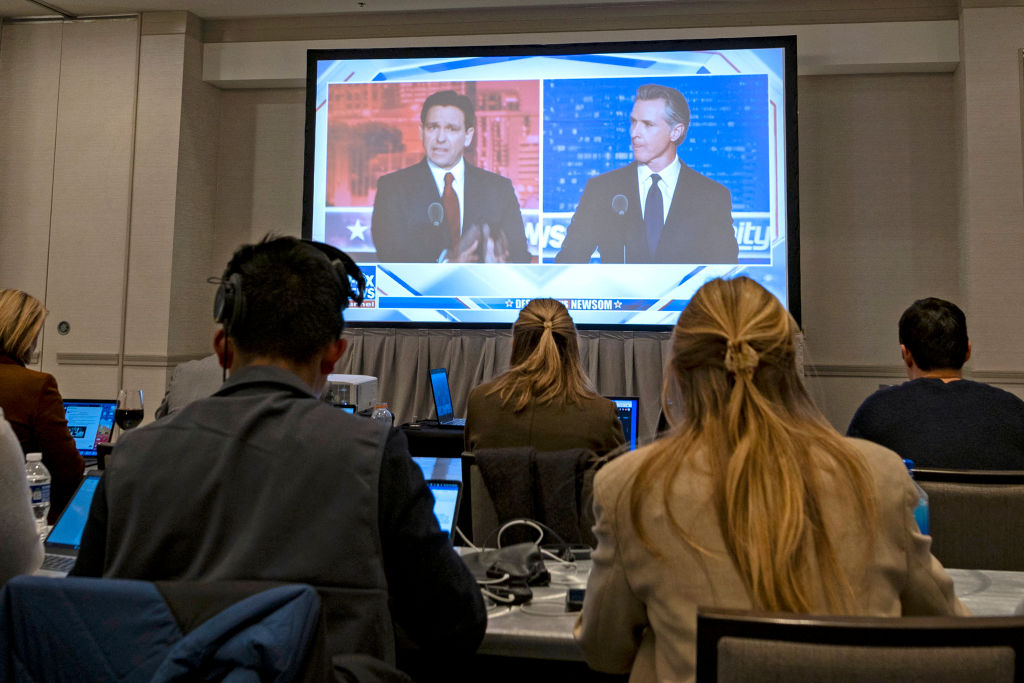
Governors DeSantis and Newsom Square Off in Unusual Televised Debate

Republican presidential candidate Florida Gov. Ron DeSantis speaks on Sept. 16, 2023, in Des Moines, Iowa, at left, and California Gov. Gavin Newsom, speaks on Sept. 12, 2023, in Sacramento, Calif.

WASHINGTON — Two big-state governors with presidential ambitions, California Democratic Gov. Gavin Newsom and Florida Republican Gov. Ron DeSantis, battled Thursday over the economy, pandemic restrictions and President Joe Biden‘s leadership in a prime-time showdown filled with fiery clashes over policy and personal insults.

[time-brightcove not-tgx=”true”]

“He’s joined at the hip with Biden and (Vice President Kamala) Harris,” DeSantis charged after repeatedly referring to Newsom as “slick.” “California represents the Biden-Harris agenda on steroids.”

Read More: Ron DeSantis on Fatherhood, Parents’ Rights, and the 2024 Campaign

Newsom welcomed the attack: “I’m proud of the work Biden and Harris have done,” he said. And he addressed DeSantis’ struggling presidential bid head on: “Neither of us will be the nominee for a party in 2024.”

The host, Fox News Channel, billed the 90-minute affair hosted by Sean Hannity as “The Great Red vs. Blue State Debate.” Yet it was held in a television studio with no audience in Georgia, a location chosen for its key swing-state implications in national politics. And it played out in the heart of presidential primary season with voters in both parties paying closer attention to their 2024 options heading into next fall’s general election.

As leaders of two of the three most populous states, DeSantis and Newsom have spent much of the past year poking each other’s policy choices and leadership style from afar. But on Thursday night, they were getting their first chance to challenge each other on the same national stage.

Donald Trump’s presidential campaign, aware that the unusual event was drawing national attention, unleashed a slew of fresh insults at DeSantis, one of his strongest Republican primary rivals, in a statement shortly before it began.

“Ron DeSanctimonious is acting more like a thirsty, third-rate OnlyFans wannabe model than an actual presidential candidate,” the Trump campaign wrote, using one of the many nicknames the former president has given his rival. “Instead of actually campaigning and trying to turn around his dismal poll numbers, DeSanctus is now so desperate for attention that he’s debating a Grade A loser like Gavin Newsom.”

DeSantis, a 45-year-old Republican governor elected to his second and final term last fall, is already actively running for president. But he has struggled for momentum in a 2024 campaign plagued by missteps in his bid to defeat Trump, who remains the overwhelming front-runner in the GOP primary.

Newsom, California’s 56-year-old term-limited Democratic governor, has positioned himself to seek the presidency someday, but like the rest of his party’s most ambitious leaders, he declined to challenge President Joe Biden for the Democratic nomination in 2024. Instead, he’s emerged as a leading defender of Biden and a formal campaign adviser.

Ahead of the debate, Newsom sent out a message to supporters encouraging them to donate at least $10 to Biden’s reelection. “I want to tell Fox News viewers something they’ve never heard before… The truth about Joe Biden’s record,” he wrote. “But before I do — Joe Biden needs your help as well.”

Still, both Newsom and DeSantis saw Thursday night’s meeting as a real opportunity to strengthen their political standing in the short and longer term.

DeSantis’ allies have been talking up the event in recent days as a rare opportunity to prove his strength against one of the nation’s most prominent Democrats — a sharp contrast from recent Republican presidential debates where he’s struggled to break through on a stage where the candidates agree on most issues. And even some of DeSantis’ Republican rivals privately acknowledged he would likely raise a significant amount of money through online donations as a result of the appearance.

Meanwhile, Newsom, who, like DeSantis, will be out of a job come January 2027, has been eager to broaden his political profile ahead of a possible presidential bid in 2028 — or sooner, should the 81-year-old Biden unexpectedly drop out. Newsom has repeatedly shut down whispers about his interest in a 2024 bid.

But on Thursday, the California Democrat was speaking to a new set of voters on the conservative friendly Fox News, in line with his recent political strategy. In March, Newsom launched the “Campaign for Democracy” committee, which has allowed him to travel to red states that Democrats typically avoid. In recent months, he has visited Arkansas, Missouri, Montana, Utah and Florida.

Newsom has paid particular attention to Florida as DeSantis racked up conservative policy wins in recent years that pushed the purple state farther and farther to the right. In turn, DeSantis traveled to California earlier in the year and posted a video to social media highlighting drug use and homelessness in San Francisco, blaming the state’s “leftist policies.”

“Whether Newsom or Biden is the Democrat nominee in ’24, they both offer the same failed and dangerous ideology for America that helped get us in this mess,” DeSantis spokesperson Andrew Romeo posted on X, formerly Twitter. “We look forward to putting Ron DeSantis’ record of success up against it.”


from TIME https://ift.tt/Hn51O3u

Wednesday, November 29, 2023

Breaking Down The Biggest Moments from Virgin River‘s Christmas Episodes

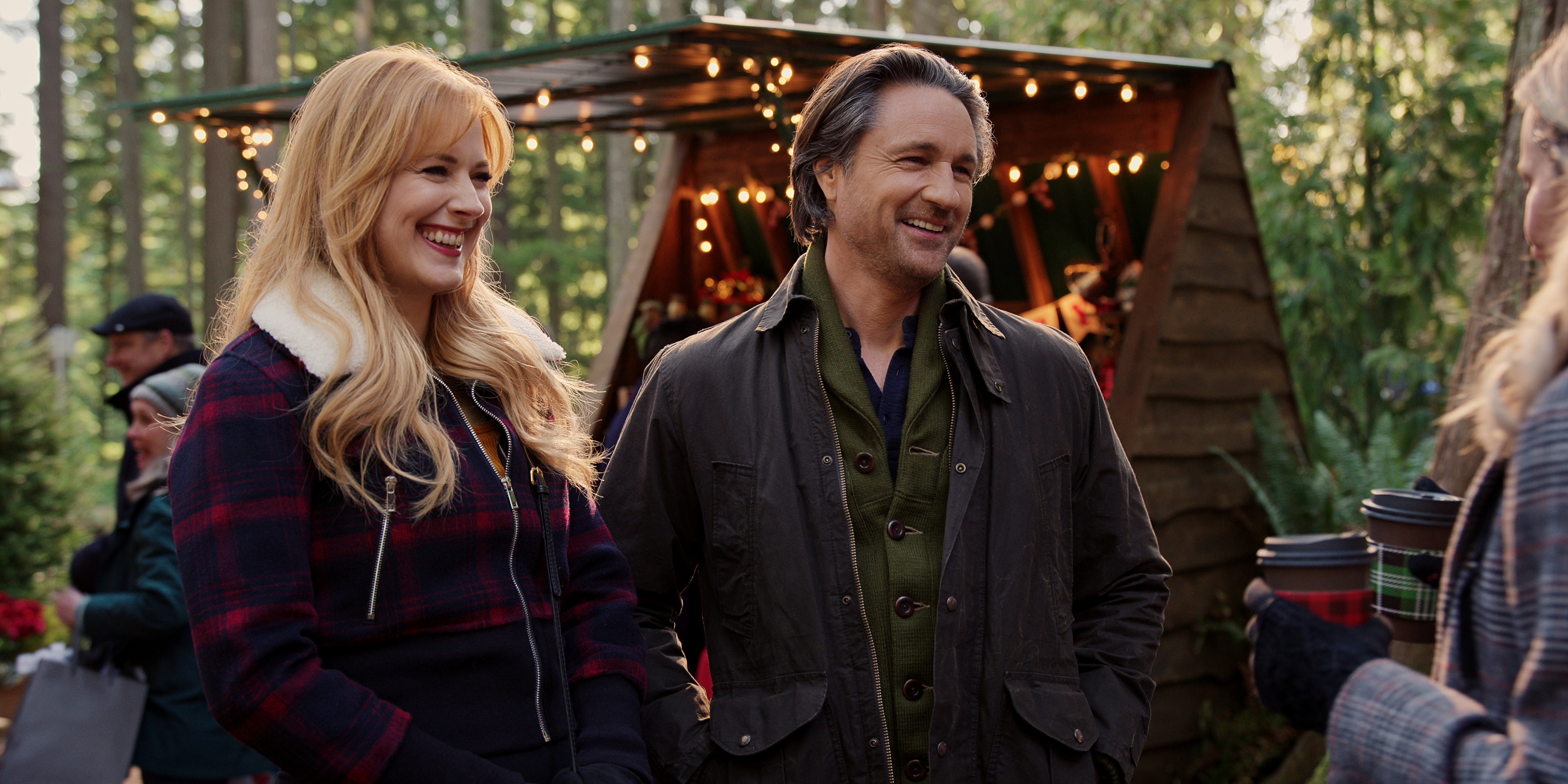
Virgin River. (L to R) Alexandra Breckenridge as Mel Monroe, Martin Henderson as Jack Sheridan in episode 511 of Virgin River. Cr. Courtesy of Netflix © 2023

Warning: This post contains spoilers for Netflix’s Virgin River.

It’s finally Christmastime in Virgin River, where the weather may be chilly but the gossip always runs hot. Netflix just dropped the final two episodes of Virgin River’s fifth season, and while they focus on fun holiday fare, there’s plenty of drama swirling among the residents of the cozy fictional North California town.

[time-brightcove not-tgx=”true”]

When we last saw Virgin River’s nurse Mel Monroe (Alexandra Breckenridge), she’d just learned some shocking information about her family. Having lost both her parents years ago, Mel long thought of herself as somewhat of an orphan. But at the end of the first part of season 5, Mel found out that her mother had an affair with a man—who might be her biological father. Determined to uncover the truth, Mel and her fiancée Jack (Martin Henderson) set off on an eye-opening adventure. As they follow the clues that lead them to the man who may be her father, the rest of the town is getting ready to celebrate the holidays, with several characters gearing up to make huge life changes. Here are the biggest moments from the Virgin River holiday episodes.

Lizzie tells her mom she’s pregnant

Virgin River. Deb Podowski as Deidre in episode 512 of Virgin River. Cr. Courtesy of Netflix © 2023

While Lizzie (Sarah Dugdale) and Denny (Kai Bradbury) are excited to become parents, the former is not excited to tell her mother that she’s having a baby. When she initially sees her mother, who is visiting from out of town, Lizzie avoids the topic altogether. Hope (Annette O’Toole) asks Lizzie if she is resistant to talking to her mother because she is having second thoughts about her pregnancy, but Lizzie tells her that she’s not having any doubts, and is more concerned that her mother will think she can’t handle raising a child. Unfortunately, as Hope and Lizzie are having that conversation, Lizzie’s mother is in earshot and overhears them. 

Eventually, Lizzie finds her mother, and asks for support in her decision to have the baby. Her mother explains that she’s worried that Lizzie will be taking on too much by caring for Denny, who has Huntington’s disease, and their baby. But Lizzie reaffirms her deep desire to be a parent, and how much she wants the baby, which leads her mother to come around. Later, Lizzie and Denny announce to Lizzie’s mother and Hope that they are expecting a girl. 

Cameron and Muriel reconsider their future

Virgin River. (L to R) Mark GhanimŽ as Dr Cameron Hayek, Teryl Rothery as Muriel, Trevor Lerner as Bert, Ava Anton as Hazel, Kai Bradbury as Denny in episode 511 of Virgin River. Cr. Courtesy of Netflix © 2023

After the town play, Cameron (Mark Ghanime) gets a surprise: his ex-wife is there. Now sober, she wants to give them another chance and start a family together. But Cameron tells her that he has a life in Virgin River, with Muriel (Teryl Rothery). When he tells Muriel about the conversation, she is relieved, but she lets him know that she’s not interested in having children. Cameron says he is fine with their family as it is, which Muriel later doubts. She expresses to him that she doesn’t want him to resent her down the road, and asks him to really think about what it would mean for both their futures if they stayed together.

Charmaine finally gives birth

Virgin River. (L to R) Tim Matheson as Doc Mullins, Lauren Hammersley as Charmaine in episode 502 of Virgin River. Cr. Courtesy of Netflix © 2023

Finally, after being pregnant with twins for almost the entire length of the series, Jack’s ex-girlfriend Charmaine (Lauren Hammersley) gives birth. Despite lying to Jack and Mel about the paternity of the babies for several months, the couple have forgiven Charmaine and now all is amicable between the three. Mel even assists with the delivery at Doc’s clinic. Charmaine also has a confrontation with the babies’ actual father, the local drug lord Calvin, which might have induced her labor. Though he arrives with her at the clinic, Mel tells him to leave because Charmaine doesn’t want him there. Calvin is resistant, but walks away. While the situation with Calvin might be difficult, Charmine is happy to have given birth to two healthy babies.

Brady’s new girlfriend seems shady

Virgin River. Benjamin Hollingsworth as Brady in episode 511 of Virgin River. Cr. Courtesy of Netflix © 2023

After finally getting out of the drug ring that caused his personal life to implode, Brady (Benjamin Hollingsworth) is finally on the path to a simpler, safer life. He’s been seeing a single mother named Lark (Elise Gatien) who has a young daughter. The trio seems happy together, and Brady might actually be moving on from Brie (Zibby Allen). But while the three are playing in Brady’s bedroom, Lark takes a call outside. It’s Jimmy—the drug dealer in jail played by Ian Tracey—who appears to be the father of Lark’s daughter, and is asking her about Brady. Lark tells him that Brady “doesn’t suspect a thing.” It seems like Brady’s attempt to stay out of the drug circle’s drama has just gotten a lot more complicated.

Wes’ body is identified

Virgin River. Colin Lawrence as Preacher in episode 511 of Virgin River. Cr. Courtesy of Netflix © 2023

Preacher (Colin Lawrence) and Kaia (Kandyse McClure) are basically in their own rom-com during these episodes, until it all falls apart in the final minutes for ol’ Preach. They’ve spent a lot of time snuggling up together, he even tells her that he loves her, and she tells him that she’s taking a job in Virgin River, so their future is looking bright. But looming over their lovefest is something quite troubling: Preacher knows that Wes’ body was found in the woods where he buried him. And it comes back around by the end of the last episode: Preacher gets a call that Wes’ body has been identified.

Mel tracks down her father

Virgin River. (L to R) Alexandra Breckenridge as Mel Monroe, Jenny Cooper as Joey Barnes in episode 511 of Virgin River. Cr. Courtesy of Netflix © 2023

As teased in the end of the first part of the fifth season, Mel’s sister Joey (Jenny Cooper) discovers love letters written to their mother from before Mel was born. They are postmarked from Virgin River, which is curious because neither sister was aware that their mother knew anyone from the small town. Based on the content and timeline of the letters, Joey believes that the person writing them is Mel’s biological father. So, Mel decides to figure out the identity of the mysterious man with Jack. They begin by looking into the return address—a P.O. Box—and finding the old postmaster from that time. It turns out the postmaster is the Santa Claus in Clear River, which is where Mel and Jack go to ask him about the address. While the old man doesn’t remember the exact name of the man behind the P.O. Box, he does give Mel and Jack a very helpful clue: that the man used to brag about winning the 1976 Lumberjack Games.

With that detail, the couple is able to trace the winner and discover that his name is Everett Reid. They then reach out to Preacher who asks his private investigator to look into Everett’s address, which they are able to find. When Mel knocks on the door, the man (John Allen Nelson) who opens it says he’s not the person she’s looking for, and can’t help her. But Mel looks into his house and sees the trophy for the Lumberjack Games, confirming, to her disappointment, that he is indeed Everett, and he clearly isn’t interested in building a relationship with her.

In a twist, Everett shows up at Mel and Jack’s cabin at the end of the second episode to explain himself. He says that he was taken aback when Mel showed up because she looks so much like her mother. Everett confirms that he’s Mel’s father, gives her all the letters that her mother wrote to him, and announces that he has something very important he needs to tell her. While we won’t find out exactly what that is until next season, Mel is also left with a big update involving another father figure in her life: Earlier in the episode, she asked Doc to walk her down the aisle at her wedding—and he agreed.


from TIME https://ift.tt/e8Mh6P4

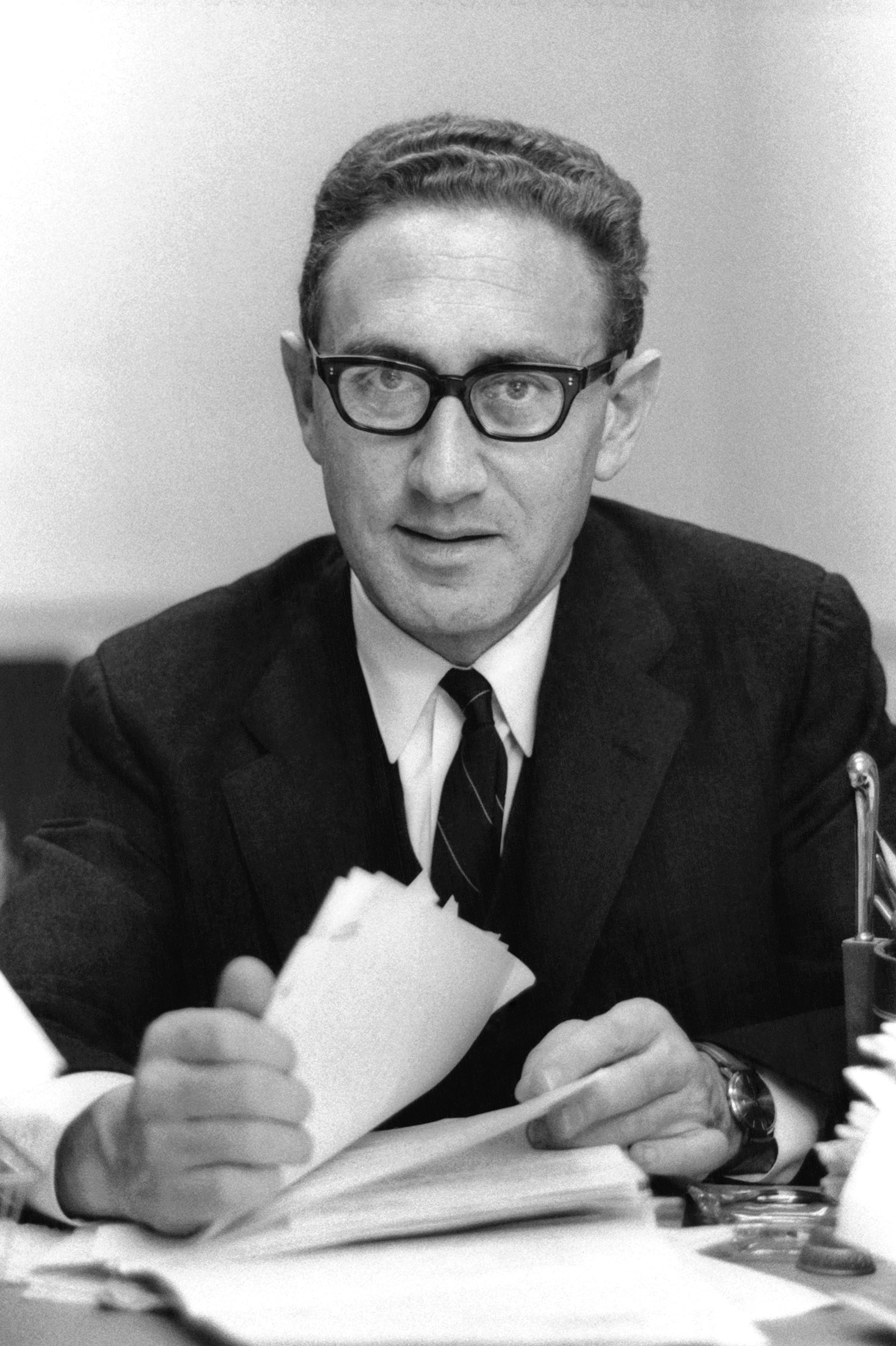
Henry Kissinger, Influential and Polarizing U.S. Secretary of State, Dies at 100

Henry Kissinger

Henry Kissinger, the former Secretary of State known for his realist approach to foreign policy during the Nixon and Ford administrations, has died. He was 100.

News of his death was confirmed by a statement from his consulting firm.

Kissinger was a highly influential but polarizing figure. His impact extended beyond his tenure as national security adviser from 1969 to 1975 and overlapping/concurrent service as Secretary of State from 1973 to 1977, for decades spanning from the Vietnam War to the aftermath of 9/11. He leaves behind a mixed legacy: Once the most admired man in America according to a 1973 Gallup poll—the same year that he was controversially named the joint recipient of a Nobel Peace Prize for the Paris Peace Accords, along with North Vietnamese counterpart Le Duc Tho—he has also been fiercely criticized as a war criminal.

[time-brightcove not-tgx=”true”]

As Secretary of State, he was known for pioneering a policy of détente with the Soviet Union and promoting an open door policy toward China. He’s also credited with eventually (some would argue belatedly) extricating America from the Vietnam War. But his critics have argued that his policies contributed to millions of deaths by permitting heavy bombing in Cambodia and Laos, blocking the ascension of a democratically elected leader in Chile, genocides in East Timor and Bangladesh and civil war in southern Africa.

Born in 1923 near Nuremberg, Germany, Heinz Alfred Kissinger and his Jewish family fled the Nazis in 1938. (Once in America, he changed his name to Henry.) As a new American citizen, he served in the U.S. Army for three years, returning to Europe to fight in World War II and receiving a Bronze Star in 1945. Kissinger then earned bachelor’s, master’s and doctoral degrees from Harvard, where he held a faculty appointment from 1954 to 1969.

Kissinger was one of the leading practitioners of realpolitik, arguing that pragmatism—rather than idealism—should govern America’s approach to foreign policy. He once famously said that “power is the ultimate aphrodisiac,” a mentality that manifested itself, some critics alleged, in a calculating and opportunistic approach to his professional relationships.

In the 1968 presidential election, Kissinger hedged his bets. After Nixon won the nomination, Kissinger—a former adviser to rival Republican Nelson Rockefeller, then Governor of New York—sent vague updates to the Nixon campaign about the status of President Lyndon B. Johnson’s peace talks with North Vietnam. But Kissinger played both sides: offering, but never ultimately delivering, Rockefeller’s opposition research on Nixon to Hubert Humphrey’s campaign.

Nixon Shakes Hands with Kissinger

Once Nixon appointed him national security adviser, Kissinger proved adept at navigating the administration’s atmosphere of suspicion and wiretaps, reportedly authorizing FBI investigations and wiretaps against at least one member of his staff and further knowledge of staff surveillance.

He managed to escape the Watergate scandal largely unscathed, continuing to serve as Secretary of State until the end of the Ford administration in 1977, when he was awarded the Presidential Medal of Freedom, the nation’s highest civilian award.

After co-founding an international consulting firm, Kissinger Associates, Inc., in 1982, he continued to leverage his global connections and remain active in diplomatic circles.

Though he was no longer Secretary of State, he continued to advise future administrations. Reagan appointed him chair of the National Bipartisan Commission on Central America, which he led from 1983 until 1985. He also served as a member of the President’s Foreign Intelligence Advisory Board from 1984 to 1990.

Henry Kissinger

In November 2002, President George W. Bush appointed Kissinger chairman of the 9/11 commission, but he resigned a few weeks later amid questions about potential conflicts of interest. Kissinger also served as a “powerful, largely invisible influence” on that administration’s approach to the Iraq War, according to Bob Woodward’s State of Denial. However, Kissinger tipped his hand a bit in a 2005 op-ed, writing that “victory over the insurgency is the only meaningful exit strategy.”

Kissinger’s influence also extended to another Secretary of State, Hillary Clinton, who once wrote in The Washington Post that she “relied on his counsel.”

Some critics have objected to Kissinger’s continued involvement in American foreign policy, arguing that his actions as America’s top diplomat created long-lasting problems that the nation continues to grapple with today, such as aiding fundamentalist Islamic movements in the Middle East and playing a role in fostering American dependence on Saudi oil.

Nevertheless, Kissinger continued to remain active in both society and diplomatic circles well into his 90s. Continuing to meet with leaders from Russia and China, including at least 17 meetings with Russia’s Vladimir Putin. In June 2018, at the age of 95, he warned against the advent of artificial intelligence in a piece for The Atlantic entitled “How the Enlightenment Ends.” Two years later, in November 2020, Kissinger also warned incoming President Joe Biden to work quickly to restore U.S.-China relations that deteriorated during the Trump Administration.

But until the end, his political philosophy remained pragmatic. “America would not be true to itself if it abandoned [its] essential idealism,” he wrote in his book World Order at age 91. “But to be effective, these aspirational aspects of policy must be paired with an unsentimental analysis of underlying factors.”


from TIME https://ift.tt/AhnFs3Q

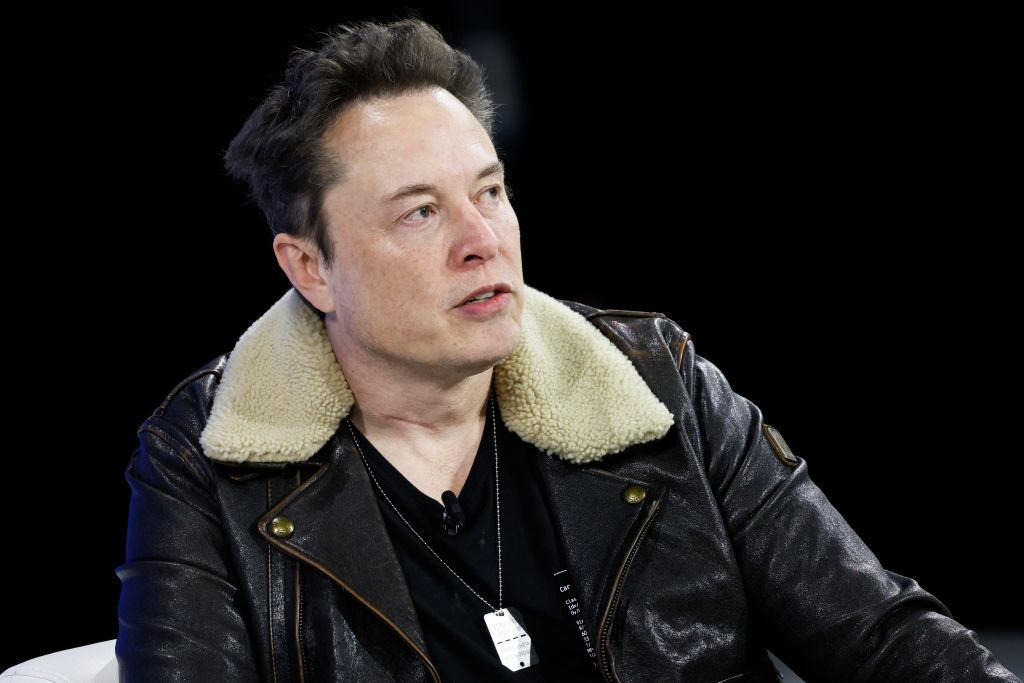
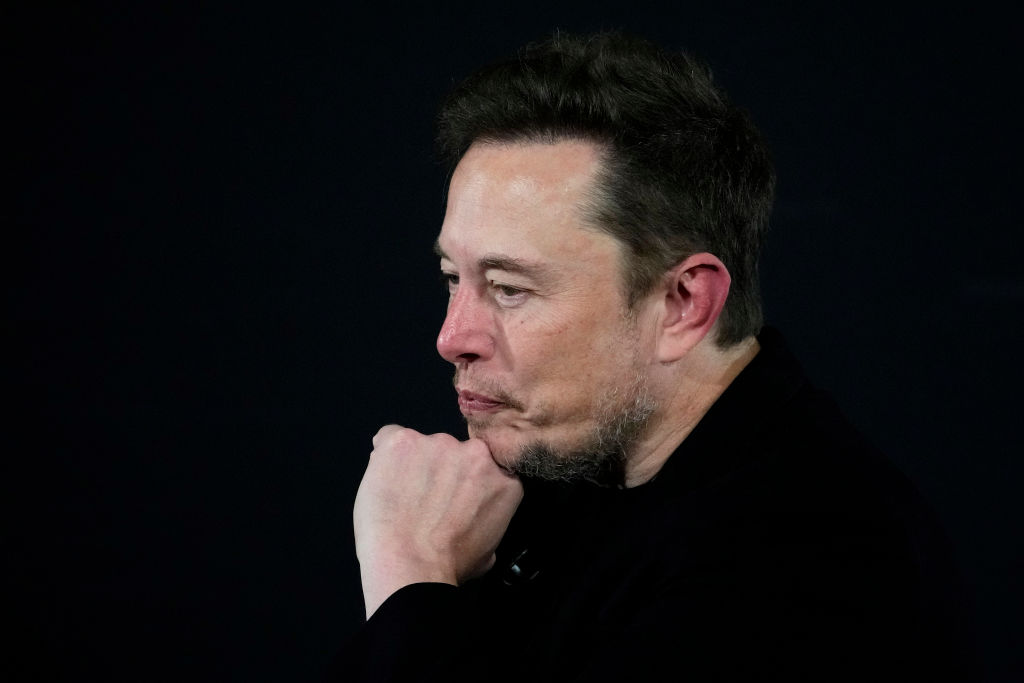
Elon Musk Tells Advertisers Boycotting X to ‘Go F-ck Yourself’

C.E.O. of Tesla, Chief Engineer of SpaceX and C.T.O. of X Elon Musk speaks during the New York Times annual DealBook summit on Nov. 29, 2023 in New York City.

Elon Musk, the billionaire owner of X, says the advertisers that have stopped spending on the platform due to his endorsement of an antisemitic post can “f——” themselves.

[time-brightcove not-tgx=”true”]

“What it’s going to do is it’s going to kill the company, and the whole world will know the advertisers killed the company,” Musk said at the New York Times DealBook conference on Wednesday. “Go f—- yourself.”

The post was the “worst and dumbest I’ve ever done,” said Musk, the chief executive officer of Tesla Inc.

Still, if advertisers leave the company, its failure will be their fault, not his — saying they were trying to “blackmail me with money,” he said. “I won’t tap dance” to prove trustworthy, he said.

Musk took the stage at the DealBook conference following a tumultuous few weeks for the world’s richest person, with a net worth of around $226 billion. 

Earlier this month, Musk agreed with a post that said Jewish people hold a “dialectical hatred” of white people. That message has since drawn criticism from the White House as well as several Tesla investors. Major corporate spenders, including Walt Disney Co. and Apple Inc., distanced themselves from the platform formerly known as Twitter.

From the DealBook stage, Musk called out to “Bob” specifically, referring to Robert Iger, the CEO of Disney. Iger spoke at the event earlier in the day.

For the first time since the post spurred a global backlash, Musk apologized for his choice of words. Musk, who flew to Israel to tour areas that were impacted by the Oct. 7 Hamas attack alongside Prime Minister Benjamin Netanyahu, said the trip was planned before the advertiser backlash. It wasn’t an “apology tour,” he said. Following his visit, he appeared on stage wearing a dog tag, which has become symbolic of a call for the return of hostages captured by Hamas, which is designated a terrorist organization by the U.S. and E.U.

Musk urged people to judge him by his actions rather than his words and brought up two companies he runs as justification. Tesla, he said, made more electric cars than competitors. SpaceX, formally named Space Exploration Technologies Corp., sends more satellites into space than any other company or country.

“Hate me, like me or indifferent. Do you want the best car, or do you not want the best car?” he said. He said he’s done “more for the environment than any human.”

Political clout

Musk also addressed the inordinate amount of power that he wields given his market power in key industries such as cars, space, satellites and social media. The billionaire holds the keys to technological tools that provide him with political clout that world leaders have come to rely on.

“The reason I have these powers isn’t because of anticompetitive actions but because we’ve executed well,” he said.

Musk, who had been close to President Barack Obama, has had a contentious relationship with the Biden administration and said on Wednesday that he couldn’t see himself voting for President Joe Biden in the 2024 U.S. presidential election.

He cited the president’s snub of Tesla, a reference to a 2021 electric vehicle summit where Biden invited legacy Detroit automakers to the White House lawn but left out Musk and Tesla. The brush off of the Musk-led automaker, which has 140,000 employees globally and is the world’s leading EV manufacturer, has remained a sore point for the billionaire.

Since then, Musk has appeared to be leaning closer to the Republican party. In October, he appeared at a fundraiser for Republican candidate Vivek Ramaswamy, and in May Musk hosted Florida Governor Ron DeSantis on X as he announced his 2024 presidential campaign.

Musk also bristled at the upswell of union activity at carmakers, which inked a record contract with the United Auto Workers union earlier this year after Biden showed up on the picket line to support unionized employees. Now, the UAW is going after Tesla. 

“I disagree with the idea of unions,” Musk said, noting that if the UAW’s unionization drive proves successful it’s because Tesla failed to provide a good enough working environment. If the EV maker’s plants are unionized, it’s because “we deserve it,” he said.

The billionaire also addressed the debacle at Open AI, the maker of ChatGPT that Musk cofounded but later stepped down from. “I have mixed feelings about Sam,” Musk said about CEO Sam Altman, who was recently ousted and reinstated. “The ring of power can corrupt.” 

He said the public should know the reason Altman was fired, in case it has to do with some dangers of AI. “I don’t think it was trivial.”

Musk is building a rival, called xAI, using the data from X, the social network. 


from TIME https://ift.tt/FDq30GO

We Can’t Address the Climate Crisis Without Nature

[time-brightcove not-tgx=”true”] KENYA-ENVIRONMENT-FORESTRY-FOREST-CLIMATE

At a climate summit this fall, Bill Gates sparked controversy by dismissing tree planting as a climate crisis solution, calling it “complete nonsense.”

To many, this may seem shocking. But the real issue stems from the misconception that ecosystem restoration is the same as mass ‘tree planting’.

If you are like so many children who grew up watching David Attenborough on TV, the idea of ecosystem restoration probably evokes visions of a beautiful planet with vibrant animals and thriving communities. This beautiful vision is not only inspiring; it is essential for our survival on this planet. This decade has been named the U.N. Decade on Ecosystem Restoration to recognize the urgent need to halt and reverse the destruction of nature.

And yet, as we approach the mid-point of this critical decade, ecosystem restoration has been suffering from an identity crisis that threatens the entire movement. The problem at the heart of this controversy is that there are conflicting ideas about what restoration actually is:

To many people, restoration means planting as many trees as possible to offset carbon emissions. Unfortunately, this view of restoration can be extremely dangerous because tree planting often gets used as an excuse to avoid cutting greenhouse gas emissions, which continue to threaten life as we know it. If the fossil fuel industry continues to spend almost a trillion dollars on expanding new oil and gas operations, even 10 planets full of trees could not offset the devastation that would result.

These monoculture “carbon farms” are not the restoration of nature. In fact, they are often the destruction of it. They often cover landscapes in a blanket of trees that grow at the expense of the native biodiversity or local people who live in that region.

Because of this greenwashing, a stream of media articles has highlighted how mass plantations can do more harm than good. GreenPeace and other environmental NGOs have called for an end to nature-based solutions. And while confidence in nature-based solutions remains low, so do financial commitments to nature, as the shortfall for biodiversity is as high as $900 billion per year.

Read More: Where We Will Live as the Planet Burns

However, nature is not the problem. Trees are not the problem. In fact, we need them more than ever before. The problem is our misuse of them as a quick fix to offset carbon emissions.

To address this growing controversy, hundreds of scientists recently joined forces to publish an Integrated Global Forest Assessment in the journal Nature. This study shows that the recovery of natural forests has the potential to help with ⅓ of our carbon drawdown needs in the fight against climate change. But it also shows that these climate benefits will not be achieved if we don’t cut greenhouse gas emissions.

If emissions continue, then fires, drought and warming will only threaten the forests that we have left. The science is clear, that there can be no choice between cutting emissions and protecting nature, because we urgently need both. We can’t address the climate crisis without nature, and we can’t address the nature crisis without cutting emissions.

The study also shows that the full potential of forests will not be achieved by monoculture tree plantations, which store less than half as much carbon as diverse ecosystems. Most (61%) of the forest potential can be achieved by protecting and managing the ecosystems that we have left, allowing them to recover to maturity. The rest can be achieved by incentivizing community-driven efforts to enhance biodiversity in degraded regions.

Ultimately, these climate mitigation benefits are fantastic, but the climate adaptation benefits for local people are far more important. Diverse, natural ecosystems can have a cooling effect in the hottest regions, they can trap moisture in the driest regions, and they are therefore vital to the resilience of communities in the face of climate change. These benefits are not limited to forests, as we desperately need to protect natural grasslands, peatlands, wetlands, and all other ecosystems that are equally essential to life on Earth.

So how do we achieve the benefits of ecosystem restoration, whilst avoiding the threat of greenwashing? I believe that we must first align on what the goal of nature restoration really is.

We need to end our tunnel vision on carbon, because that is not the primary goal. The real goal of ecosystem restoration is improving biodiversity for the local people who depend on it. To do this, the real challenge is to find the solutions that make natural biodiversity the viable option for local people.

Across our planet, there are millions of local communities, indigenous populations, farmers, and businesses who are finding the solutions that make healthy biodiversity the preferred economic choice. For these initiatives, carbon is not the goal. It is a byproduct of healthy livelihoods.

You can see thousands of them on the global restor.eco network. When Leitoro Adrian protects patches of local Kenyan forest with the NaPO network, the vegetation traps moisture so that his cattle can graze. By protecting nature, Leitoro is securing sustainable food, livelihoods and medicines for the Rendille tribe that he belongs to. This means that nature has become a viable option. As more and more nearby villages join in, nature continues to recover across the entire landscape.

Leitoro is not alone. Like the farmers in the Centro De Estudos Rioterra community in Brazil, or the community conservationists of Lemo Nakai Village in Indonesia, Leitoro is one of countless people across the globe that depend directly on healthy, diverse forests for his livelihood.

When you see the thriving biodiversity supporting local livelihoods, then the real value of ecosystem restoration becomes abundantly clear. And the slogan of Zambian farmer, Samuel Kamwendo—“no trees, no bees; no honey, no money”—requires absolutely no explanation.

To end greenwashing, organizations should not invest in mass monoculture plantations and carbon offsets. Instead, our financial and political mechanisms need to distribute the flow of wealth towards millions of community-driven initiatives like this, which enhance biodiversity for the people who depend on it.

These are the local stewards of nature, who are protecting all of us against the global threats of climate change and biodiversity loss. We need to invest, donate, and buy products from these local, community-driven initiatives around the world so that more and more people can become economically empowered by nature.

When healthy nature becomes the viable option for local people, that is when we get the long-term climate benefits of nature as a wonderful byproduct.


from TIME https://ift.tt/FuOrbHC

K-Pop Isn’t Just Making Fans Outside of Korea. It’s Trying to Make the Genre’s Next Stars

2023 Billboard Music Awards - Show

For Koreans, becoming a K-pop idol is said to be harder than winning the lottery. For those outside Korea, the path to stardom in the genre may seem even rarer—though soon, industry executives and aspiring stars around the world alike are hoping, those odds may be starting to change.

Last week, some 70 students in Singapore got a taste of what it takes to become a K-pop idol, having spent five days attending a K-pop training camp taught by some of the industry’s most renowned dance and vocal coaches who traveled to the Southeast Asian nation from Seoul. The camp was organized by the Singapore Raffles Music College (SRMC), which is planning to open—pending approval from Singapore’s education ministry—the first K-pop high school outside of Korea next year, in collaboration with the School of Performing Arts Seoul (SOPA), a popular arts high school in Seoul that has produced some of K-pop’s biggest names

[time-brightcove not-tgx=”true”]

“We understand that [SOPA] has very strong links in terms of students entering the industry,” Ryan Goh, the executive director of SRMC, tells TIME, adding that he hopes the upcoming program will build the “necessary competency within Southeast Asian talent” to become K-pop stars. 

The outward-looking expansion—engaging and collaborating with foreign cultures— is “a natural evolution of K-pop,” says Goh, who notes the genre’s increasing internationalism, particularly in the last few years, as the likes of BTS and Blackpink have topped charts and achieved mainstream popularity across the world. “We hope that we’ll have a little part in helping to build that pipeline of talent that will be part of this journey,” he adds.

Non-Korean K-pop idols have been around since as early as the 1990s, with groups like Fly to the Sky (a duo with a Korean-American singer) or S.E.S (a girl group with one Japanese member). Today, Blackpink’s Lisa, who is Thai, is the firm favorite of fans across Thailand, a testament to how international K-pop group members can mobilize international audiences. NewJeans and Stray Kids, two relatively new groups fast on the rise, each have two Australian members.

“Strategically it makes so much sense to get people who can communicate with fans from different areas,” CedarBough Saeji, assistant professor of Korean and East Asian studies at Pusan National University, tells TIME.


The new school may seem like an unprecedented gateway opening for young Southeast Asians to join the ranks of professional K-pop artists, but success—and happiness—is certainly not guaranteed.

While high schools that cater specifically to K-pop training are a relatively new, but growing, phenomenon, the system of “idol training” that the K-pop industry is looking to export is already firmly established in Korea, where every year thousands of adolescents are filtered through a notoriously brutal regimen, during which they are made to adhere to punishing schedules and maintain strict diets, while being deprived of a social life and much of their personal freedom. And even among those who complete their traineeship, only a fraction are selected by record labels to debut as K-pop idols. For every group or solo act that breaks through, there are thousands of other dashed “Hallyu-wood” dreams—trainees who land in crippling debt or who have alleged coercion or exploitation by their management. 

“I love that young people have dreams, and the K-pop industry is enormously attractive, but it’s also a really, really tough industry,” says Saeji. “I see too many young people who get into the industry, perhaps too young, and it chews them up. It is not an easy life. And I think that when you’re 16 years old, you don’t understand how hard it can be.”

“I worry a little bit that these kinds of schools are making up profit off the dreams of young people,” Saeji adds. “They’re setting some young people up for a difficult future, perhaps for disappointment.”

Still, for many students and their parents, the rigorous curriculum and sizeable pricetag of K-pop training aren’t enough to deter the pursuit of stardom.

“These past five days have been really tough,” says Chu Xiyi, a 17-year-old camp attendee and incoming vocal training student at SRMC. “But if this would let me have a better future, then I think this is all very worth it.”

Lai Hooi Chin, who enrolled her 12-year-old daughter in the camp, which cost more than $2,000, tells TIME they’ve also signed up for another K-pop boot camp held in Seoul next month for around the same price. Her daughter, Ong Lixuan, tells TIME, after participating in a showcase on the camp’s final night, that the grueling five days of training only strengthened her resolve. “I told myself before that even if it’s hard, I’m not gonna give up,” she says. “Because that’s my dream. That’s what I’ve been chasing for.”

K-pop teachers don’t shy away from the hard reality. “Being an idol is not just a dream,” one SOPA instructor solemnly told a room full of enthusiastic teen and tween attendees on the last day of the camp. “It’s a job, just like any job.”

SRMC’s Goh says that the recent camp was aimed at giving students a “complete experience” of the K-pop industry. The school, he adds, which is expecting to commence with 75 students in the second half of 2024, will make sure to incorporate sufficient breadth in its curriculum to prepare students “if they are unable to become a star.”


from TIME https://ift.tt/YmQkeTG

Tuesday, November 28, 2023

Charlie Munger, Warren Buffet’s Longtime Sidekick at Berkshire Hathaway, Dies at 99

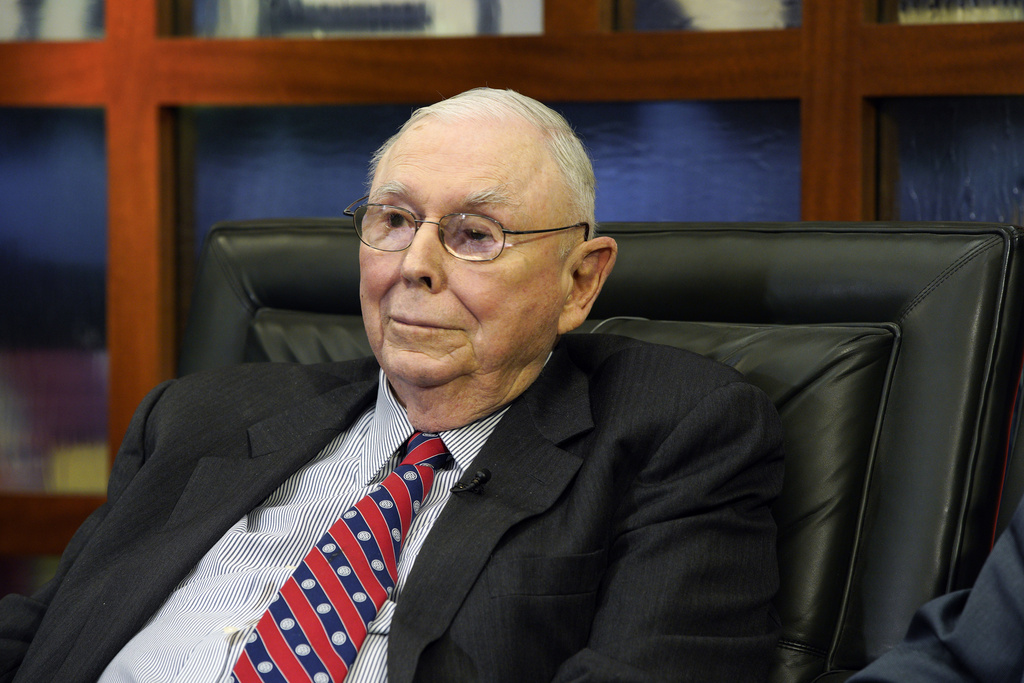
Berkshire Hathaway Vice Chairman Charlie Munger listens to a question during an interview on May 7, 2018, in Omaha, Neb.

OMAHA, Neb. — Charlie Munger, who helped Warren Buffett build Berkshire Hathaway into an investment powerhouse, has died at a California hospital. He was 99.

Berkshire Hathaway said in a statement that Munger’s family told the company that he died Tuesday morning at the hospital just over a month before his 100th birthday.

[time-brightcove not-tgx=”true”]

“Berkshire Hathaway could not have been built to its present status without Charlie’s inspiration, wisdom and participation,” Buffett said in a statement. The famous investor also devoted part of his annual letter to Berkshire shareholders earlier this year to a tribute to Munger.

Munger served as Buffett’s sounding board on investments and business decisions and helped lead Berkshire for more than five decades and served as its longtime vice chairman.

Munger had been using a wheelchair to get around for several years but he had remained mentally sharp. That was on display while he fielded hours of questions at the annual meetings of Berkshire and the Daily Journal Corp. earlier this year, and in recent interviews on an investing podcast and also with The Wall Street Journal and CNBC.

Munger preferred to stay in the background and let Buffett be the face of Berkshire, and he often downplayed his contributions to the company’s remarkable success.

But Buffett always credited Munger with pushing him beyond his early value investing strategies to buy great businesses at good prices like See’s Candy.

“Charlie has taught me a lot about valuing businesses and about human nature,” Buffett said in 2008.

Buffett’s early successes were based on what he learned from former Columbia University professor Ben Graham. He would buy stock in companies that were selling cheaply for less than their assets were worth, and then, when the market price improved, sell the shares.

Munger and Buffett began buying Berkshire Hathaway shares in 1962 for $7 and $8 per share, and they took control of the New England textile mill in 1965. Over time, the two men reshaped Berkshire into the conglomerate it is today by using proceeds from its businesses to buy other companies like Geico insurance and BNSF railroad, while also maintaining a high-profile stock portfolio with major investments in Apple and Coca-Cola. The shares have grown to $546,869 Tuesday, and many investors became wealthy by holding onto the stock.

Munger gave an extended interview to CNBC earlier this month in preparation for his 100th birthday, and the business network showed clips from that Tuesday. In his characteristic self-deprecating manner, Munger summed up the secret to Berkshire’s success as avoiding mistakes and continuing to work well into his and Buffett’s 90s.

“We got a little less crazy than most people and a little less stupid than most people and that really helped us,” Munger said. He went into more detail about the reasons for Berkshire’s success in a special letter he wrote in 2014 to mark 50 years of helping lead the company.

During the entire time they worked together, Buffett and Munger lived more than 1,500 miles (2,400 kilometers) apart, but Buffett said he would call Munger in Los Angeles or Pasadena to consult on every major decision he made.

“He will be greatly missed by many, perhaps by nobody more than Mr. Buffett, who relied heavily on his wisdom and counsel. I was envious of their friendship. They challenged each other yet seemed to really enjoy being in each other’s company,” Edward Jones analyst Jim Shanahan said.

Berkshire will likely be OK without Munger, CFRA Research analyst Cathy Seifert said, but there’s no way to replace the role he played. After all, Munger may have been one of the few people in the world willing to tell Buffett he is wrong about something.

“The most pronounced impact, I think, is going to be over the next several years as we see Buffett navigate without him,” Seifert said.

Munger grew up in Omaha, Nebraska, about five blocks away from Buffett’s current home, but because Munger is seven years older the two men didn’t meet as children, even though both worked at the grocery store Buffett’s grandfather and uncle ran.

When the two men met in 1959 at an Omaha dinner party, Munger was practicing law in Southern California and Buffett was running an investment partnership in Omaha.

Buffett and Munger hit it off at that initial meeting and then kept in touch through frequent telephone calls and lengthy letters, according to the biography in the definitive book on Munger called “Poor Charlie’s Almanack: The Wit and Wisdom of Charles T. Munger.”

The two men shared investment ideas and occasionally bought into the same companies during the 1960s and ’70s. They became the two biggest shareholders in one of their common investments, trading stamp maker Blue Chip Stamp Co., and through that acquired See’s Candy, the Buffalo News and Wesco. Munger became Berkshire’s vice chairman in 1978, and chairman and president of Wesco Financial in 1984.

Berkshire’s legions of devoted shareholders who regularly packed an Omaha arena to listen to the two men will remember the curmudgeonly quips Munger offered while answering questions alongside Buffett at the annual meetings.

Munger was known for repeating “I have nothing to add” after many of Buffett’s expansive answers at the Berkshire meetings. But Munger also often offered sharp answers that cut straight to the heart of an issue, such as the advice he offered in 2012 on spotting a good investment.

“If it’s got a really high commission on it, don’t bother looking at it,” he said.

Investor Whitney Tilson has attended the past 26 years of Berkshire Hathaway annual meetings for the chance to learn from Munger and Buffett, who doled out life lessons along with investing tips. Tilson said Munger advised that after achieving some success “your whole approach to life should be how not to screw it up, how not to lose what you’ve got” because reputation and integrity are the most valuable assets, and both can be lost in a heartbeat.

“In the investment world, it’s the same thing is in your personal world, which is your main goal should be avoiding the catastrophic mistakes that could destroy an investment record, that can destroy a life,” Tilson said.

Munger famously summed that advice up humorously by saying, “All I want to know is where I’m going to die so (that) I never go there.”

Munger was known as a voracious reader and a student of human behavior. He employed a variety of different models borrowed from disciplines like psychology, physics and mathematics to evaluate potential investments.

Munger studied mathematics at the University of Michigan in the 1940s, but dropped out of college to serve as a meteorologist in the Army Air Corps during World War II.

Then he went on to earn a law degree from Harvard University in 1948 even though he hadn’t finished a bachelor’s degree. He co-founded a law firm in Los Angeles that still bears his name, but decided before long that he preferred investing.

Munger built a fortune worth more than $2 billion at one point and earned a spot on the list of the richest Americans. Munger’s wealth decreased over time as he gave more of his fortune away, but the ever increasing value of Berkshire’s stock kept him wealthy.

Munger has given significant gifts to Harvard-Westlake, Stanford University Law School, the University of Michigan and the Huntington Library as well as other charities. He also gave a significant portion of his Berkshire stock to his eight children after his wife died in 2010.

Munger also served on the boards of Good Samaritan Hospital and the private Harvard-Westlake School in Los Angeles. And Munger served on the board of Costco Wholesale Corp. and for years as chairman of the Daily Journal Corp.


from TIME https://ift.tt/UjqQRWE

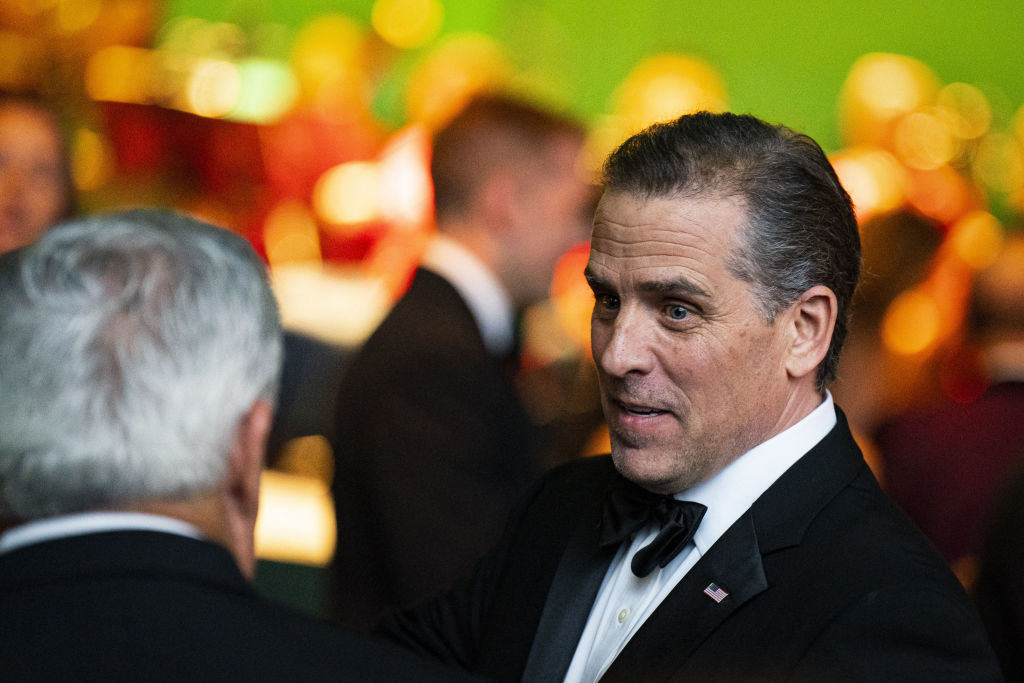
Biden Impeachment Effort Hits Critical Stage as Hunter Biden Pushes to Testify Publicly

President Biden Hosts India Prime Minister Modi For State Visit

The yearlong effort by House Republicans to impeach President Joe Biden is reaching a critical stage, as the President’s brother and son may testify in the coming weeks even as questions linger about whether the disjointed investigation has uncovered any impeachable offenses.

[time-brightcove not-tgx=”true”]

House Republicans have yet to prove that money made by Joe Biden’s son Hunter or other family members in overseas business deals made it to Joe Biden or influenced his actions while he was President or Vice President. Months of press releases and depositions by the Republican leaders of the House Oversight Committee have been big on fanfare and light on substance.

Joe Biden’s brother Jim Biden is scheduled to be interviewed by the committee on Dec. 6, and Joe Biden’s son Hunter is scheduled to be deposed on Dec. 13. 

Hunter Biden’s legal team believes the Republicans’ case against the President is weak enough that its lead lawyer on Tuesday challenged Rep. James Comer, the chairman of the House Oversight Committee, to let Hunter testify at a public hearing. “Our client will get right to it by agreeing to answer any pertinent and relevant question you or your colleagues might have, but—rather than subscribing to your cloaked, one-sided process—he will appear at a public Oversight and Accountability Committee hearing,” Abbe Lowell wrote on Hunter Biden’s behalf. “A public proceeding would prevent selective leaks, manipulated transcripts, doctored exhibits, or one-sided press statements.”

Comer refused the offer, saying Hunter Biden would be deposed privately and could be called later to testify in a public hearing. The House Oversight Committee “won’t conduct this investigation on Hunter’s terms,” Comer wrote Tuesday on X. “The President’s son must first appear for a deposition.”

The public back-and-forth came as some House Republicans are acknowledging that the information uncovered so far hasn’t shown Joe Biden being influenced by money being made by his son or other family members, or it playing a role in any of his actions as a public servant. On Tuesday, Fox Business anchor Maria Bartiromo, who’s been driving attention toward Comer’s investigation for months, asked Rep. Lisa McClain of Michigan, a member of the Oversight Committee, if Republicans had found any policy changes Joe Biden made as a result of those business deals. “The short answer is no,” McClain said. “That’s what we are trying to get to right now.” 

The inquiry has produced evidence suggesting Hunter Biden traded off his family name to advance his business interests. Hunter Biden is also the focus of a federal criminal investigation and has been charged with lying about his drug use when he purchased a handgun in 2018.

Meanwhile, Comer has been casting his investigation farther afield. On Monday, the Kentucky Republican wrote in an op-ed published by Fox News that the Committee has concerns about the classified documents found last year in a closet in Joe Biden’s University of Pennsylvania offices in Washington, D.C., but that the prosecutor investigating the documents case, Special Counsel Robert Hur, refused to let House Republicans look at the material.

The inquiry into Biden’s improper possession of classified documents has unfolded alongside an investigation into former President Donald Trump’s taking of classified documents to his home in Florida, with Trump allegedly refusing to give some of them back. That led to Trump being federally charged in August in a case that could reach trial next year. Biden has said he didn’t know the classified documents were in his possession and that he returned them promptly when they were discovered.

Comer wrote that he was concerned individuals without security clearances may have had access to the Biden documents and that some of the documents were related to countries where Biden’s son and family members were doing business deals. But Comer hasn’t shown evidence that’s the case.

“President Biden’s mishandling of classified material and his involvement in his family’s business schemes threaten our national security,” Comer wrote in his op-ed, suggesting the documents could play a larger role than previously expected in an impeachment push that’s expected to reach its final stages early next year.

The House impeachment inquiry into Biden is picking up momentum after the House muddled through a leadership crisis throughout most of October, after the chamber voted to oust Rep. Kevin McCarthy as Speaker. His replacement, Speaker Mike Johnson, is watching the impeachment proceedings closely and said earlier this month that the inquiry is at “an inflection point” and that the “appropriate” next step is to put witnesses under oath and question them to “fill gaps in the record.” 


from TIME https://ift.tt/1HkV5zE

The Time Has Come to End World Hunger

Daily Bread Food Bank

In a nation as affluent as the United States, it’s a harsh reality that more than 44 million people, including vulnerable children and seniors, grapple daily with food insecurity. Yet, this problem is not confined within any single nation’s borders. Globally, conflicts, climate changes, and a worldwide pandemic have escalated the number of those in dire need of access to food from 80 million to an astonishing 350 million in the past seven years. 

[time-brightcove not-tgx=”true”]

If the chronically hungry formed their own nation today, it would be the third-largest in the world. This isn’t just a metaphor; it’s a stark representation of the vastness of this crisis.

The glaring irony is that globally, we produce sufficient food, yet fail in equitable distribution. This massive global misalignment threatens more than just the immediate need for food around the world. It underlies geopolitical instability, exacerbates shortages, and triggers mass migrations.

We cannot achieve world peace and progress on a planet half fed and half hungry.

The tools and solutions we require to combat the challenge are available, including more sustainable, efficient ways to provide short-term hunger relief, and new production systems and delivery methods to provide nutritious food and clean water. Piecemeal action is already happening, but we can collectively do much better. We must do better.

My own personal encounter with hunger began in childhood, in a home where meals weren’t always certain. A turning point came with an act of kindness — a stranger delivering a Thanksgiving meal. This gesture filled more than a physical void; it instilled a lifelong resolve to combat hunger.

My multi-decade journey combating hunger and its underlying contributors has been both eye-opening and disheartening. The generosity of everyday human beings is such a powerful force for good if directed. At the same time, during the past decade I have witnessed on multiple occasions cuts being made to essential hunger relief programs like the U.S. Supplemental Nutrition Assistance Program (SNAP), both before and after the pandemic. Both drive me to greater action and my search for the answer to the critical question: Why, in a world capable of producing ample food, are so many still battling hunger?

What I have concluded is that the solution lies beyond mere food provision; it’s about transforming our global perspective and methods for sustainable nourishment. It involves rethinking strategies to supply food without burdening impoverished populations and our planet.

As John F. Kennedy once said, “The war against hunger is truly mankind’s war of liberation.”

The financial aspect, though daunting, is manageable. Annually, $265 billion is required for sustainable hunger eradication, according to the Food and Agriculture Organization , a small fraction of the global GDP. It’s a feasible investment for the welfare of millions and the stability of our global community.

This battle against hunger demands a unified front, combining the efforts of NGOs, governments, and conscientious citizens. It’s about harnessing our resources, innovations, and collective will to bridge the gap between surplus and need.

As we strategize and form alliances, the power of individual action remains crucial. One person’s efforts can significantly impact this seemingly insurmountable issue, as history has repeatedly shown. Personally, I would have not even considered 40 years ago when I started giving food to just two families that I would now be able to successfully deliver 1 billion meals to families in the U.S.

Big-minded, innovative approaches are needed to tackle the diverse challenges of global hunger. This includes investing in agricultural technology to improve crop yields in underdeveloped regions, creating better food storage and transportation methods to reduce waste, and implementing policies that ensure fair distribution of resources needed to sustainably feed the world.

Furthermore, it’s essential to address the root causes of hunger, which often lie in political instability, economic disparity, and social injustice. Solutions must be holistic, addressing these underlying issues to create lasting change.

Moreover, the impact of hunger extends beyond the immediate lack of food. It affects children’s ability to learn, workers’ productivity, and the overall health of communities. Addressing hunger is not just about providing meals; it’s about laying the foundation for a healthier, more productive society. Making the investment now will more than pay for itself long-term.

As we stand at this crossroads, the challenge is not only to feed the hungry but to do so in a way that respects our planet and its resources. Sustainable practices in agriculture and food distribution are vital for the well-being of future generations.

I believe in our collective ability to address and eventually solve this crisis. This conviction stems from personal experiences and the numerous stories of resilience and generosity I’ve encountered. It’s a testament to the power of human compassion and ingenuity.

Together, we can change the course of global hunger and ensure that no individual, regardless of their location, faces the uncertainty of their next nutritious meal.


from TIME https://ift.tt/13yZKeP

How the U.S.-China Rivalry Is Putting the Internet at Risk

Video calls, streaming services, social media: In our wireless age, they all seem to simply float in the cloud. It’s easy to forget they are transmitted along actual physical wires running across the seabeds of our planet. Spanning nearly 750,000 miles, these 400-plus subsea cables handle more than 95% of internet traffic, whether it’s the news, SWIFT transactions, or government communications. Cables are the “out-of-sight arteries of globalization,” as Surabhi Ranganathan, a law professor at Cambridge University and expert on oceans, puts it. But the U.S.-China cable race is putting this essential infrastructure at risk, as existing institutions tasked with its protection seem unprepared to step in.

[time-brightcove not-tgx=”true”]

A new Asia-Europe data link is the most recent example. In February, U.S. company SubCom landed the subsea cable project for $600 million, only three years after HMN Tech, a formerly Huawei-owned Chinese company, nearly won the contract. A global consortium of telecom firms, including China Telecom and Microsoft, went for SubCom instead, even though the Chinese bid was substantially cheaper. The move came after fears of espionage had led the U.S. government to apply significant pressure on telecom firms not to back HMN Tech, reportedly under threat of sanctions. Yet as transpired in April, HMN Tech is now simply developing its own $500-million Asia-Europe cable passing via Singapore and the Middle East to France—in each of which the Chinese-led consortium has business agreements with national telecom providers.

This is not an isolated instance. The U.S. Department of Justice’s Team Telecom regularly interferes to keep Chinese companies from winning bids or laying direct U.S.-China cable links. China in turn allegedly cut off subsea internet cables at Taiwan’s Matsu island, which is closer to the mainland, in early February. Some have suggested it was a test case for China to try similar moves elsewhere. Could geopolitical cable competition, as security analysts suggest, fragment the ostensibly one-world internet infrastructure? Are we nearing a “Cold War under the sea”?

It’s not that simple. Data flows have never been truly “global.”

The first deep-sea cable connections were laid in the 1850s, and by 1866 the SS Great Eastern had laid the first durable transatlantic cable. Instead of bringing world peace or a “Victorian internet,” telegraphs connected imperial outposts more than anything. In subsequent decades, a boom in deep-sea cables greased the engines of European imperialism. Contemporaries referred to them as “the nervous system of the British Empire.” Gutta-percha, the rubber used to insulate subsea cables, became a prized commodity extracted from latex-producing colonies like Singapore and Borneo.

To smooth out technical complications, government delegates created the International Telegraph Union (ITU) in 1865, which became one of the world’s first international organizations. ITU would go on to adopt universal standards for Morse code, tariffs, and accounting rules. Other steps were taken to protect deep-sea cables; in 1884, delegates of 30 governments gathered in Paris and adopted the Convention for the Protection of Submarine Telegraph Cables. Yet these regulatory efforts failed to depoliticize telecommunications. Telegraph lines remained fiercely contested, and governments were unable to agree on protections against wartime sabotage.

The 1982 U.N. Convention on the Law of the Seas (UNCLOS) complemented the ITU by protecting companies’ “freedom to lay submarine cables and pipelines” in international waters. Yet the U.S. never signed the Convention, and both the U.S. and China have their own provisions that contradict UNCLOS. For example, UNCLOS protects the right of companies to lay and maintain cables even in a state’s exclusive economic zone (EEZ) unless this interferes with that state’s other rights. Telecom representatives are thus eager that the U.S. ratify the Convention, so that they can operate off America’s shores with less geopolitically-motivated interference.

Fast-forward to today, the ITU, which is now a U.N. agency, is still meant to oversee globalization’s electric arteries. While the ITU sets technical standards for data cables, key decisions are still taken behind closed doors in national capitals and in corporate fora.

The disparate number of players—from governments to private businesses to industry forums—complicates the ITU’s coordination and agenda-setting powers. As does the messy and unclear ownership structures of multi-company consortia that typically build, own, and operate subsea cables, as well as jurisdictional questions given that they span both domestic and international waters.

Still, ITU and UNCLOS provisions that facilitate laying cables in the high seas in the absence of a robust regulatory environment are encouraging the kind of tit-for-tat disputes over the world’s subsea cables seen earlier this year. This not only puts actual internet access at risk but also fuels conflict in geopolitically-strategic locations such as the South China Sea.

In March this year, the U.S. Congress passed the UnderSea Cable Control Act, pitting “American superiority in undersea cable capabilities” against “China’s economic and military reach.” Such language is an unnecessary provocation and another reminder that we’re far way from a global data network based on cooperation and independent regulation.

The ITU’s Strategic Plan for 2024-2027 calls for equal internet access for everyone. In a world where a vast array of services and communications depend on it, that is a laudable goal. But the actions of cable operators and governments suggest that the infrastructure underpinning the world’s data networks may actually be going in the opposite direction, in ways that could ultimately jeopardize this goal.

The ITU has to adapt and may well need to assume a stronger role. This would include not shying away from imposing clear rules about subsea cables, and actively reining in companies or their state backers. Whether it can do so remains the big question.


from TIME https://ift.tt/ZRl6Pdm

Monday, November 27, 2023

‘Authentic’ Is Merriam-Webster’s Word of 2023. Here’s Why–and What Other Words Came Close

In an age of deepfakes and post-truth, as artificial intelligence rose and Elon Musk turned Twitter into X, the Merriam-Webster word of the year for 2023 is “authentic.”

Authentic cuisine. Authentic voice. Authentic self. Authenticity as artifice. Lookups for the word are routinely heavy on the dictionary company’s site but were boosted to new heights throughout the year, editor at large Peter Sokolowski told The Associated Press in an exclusive interview.

[time-brightcove not-tgx=”true”]

“We see in 2023 a kind of crisis of authenticity,” he said ahead of Monday’s announcement of this year’s word. “What we realize is that when we question authenticity, we value it even more.”

Sokolowski and his team don’t delve into the reasons people head for dictionaries and websites in search of specific words. Rather, they chase the data on lookup spikes and world events that correlate. This time around, there was no particularly huge boost at any given time but a constancy to the increased interest in “authentic.”

This was the year of artificial intelligence, for sure, but also a moment when ChatGPT-maker OpenAI suffered a leadership crisis. Taylor Swift and Prince Harry chased after authenticity in their words and deeds. Musk himself, at February’s World Government Summit in Dubai, urged the heads of companies, politicians, ministers and other leaders to “speak authentically” on social media by running their own accounts.

“Can we trust whether a student wrote this paper? Can we trust whether a politician made this statement? We don’t always trust what we see anymore,” Sokolowski said. “We sometimes don’t believe our own eyes or our own ears. We are now recognizing that authenticity is a performance itself.”

Merriam-Webster’s entry for “authentic” is busy with meaning.

There is “not false or imitation: real, actual,” as in an authentic cockney accent. There’s “true to one’s own personality, spirit or character.” There’s “worthy of acceptance or belief as conforming to or based on fact.” There is “made or done the same way as an original.” And, perhaps the most telling, there’s “conforming to an original so as to reproduce essential features.”

“Authentic” follows 2022’s choice of “gaslighting.” And 2023 marks Merriam-Webster’s 20th anniversary choosing a top word.

The company’s data crunchers filter out evergreen words like “love” and “affect” vs. “effect” that are always high in lookups among the 500,000 words it defines online. This year, the wordsmiths also filtered out numerous five-letter words because Wordle and Quordle players clearly use the company’s site in search of them as they play the daily games, Sokolowski said.

Sokolowski, a lexicologist, and his colleagues have a bevy of runners-up for word of the year that also attracted unusual traffic. They include “X” (lookups spiked in July after Musk’s rebranding of Twitter), “EGOT” (there was a boost in February when Viola Davis achieved that rare quadruple-award status with a Grammy) and “Elemental,” the title of a new Pixar film that had lookups jumping in June.

Rounding out the company’s top words of 2023, in no particular order:

RIZZ

Slang for “romantic appeal or charm” and seemingly short for charisma. Merriam-Webster added the word to its online dictionary in September and it’s been among the top lookups since, Sokolowski said.

KIBBUTZ

There was a massive spike in lookups for “a communal farm or settlement in Israel” after Hamas militants attacked several near the Gaza Strip on Oct. 7. The first kibbutz in Israel was founded circa 1909.

Read More: Their Kibbutz Was Attacked on Oct. 7. They’re Determined to Rebuild

IMPLODE

The June 18 implosion of the Titan submersible on a commercial expedition to explore the Titanic wreckage sent lookups soaring for this word, meaning “to burst inward.” “It was a story that completely occupied the world,” Sokolowski said.

DEADNAME

Interest was high in what Merriam-Webster defines as “the name that a transgender person was given at birth and no longer uses upon transitioning.” Lookups followed an onslaught of legislation aimed at curtailing LGBTQ+ rights around the country.

DOPPELGANGER

Sokolowski calls this “a word lover’s word.” Merriam-Webster defines it as a “double,” an “alter ego” or a “ghostly counterpart.” It derives from German folklore. Interest in the word surrounded Naomi Klein’s latest book, Doppelganger: A Trip Into the Mirror World, released this year. She uses her own experience of often being confused with feminist author and conspiracy theorist Naomi Wolf as a springboard into a broader narrative on the crazy times we’re all living in.

CORONATION

King Charles III had one on May 6, sending lookups for the word soaring 15,681% over the year before, Sokolowski said. Merriam-Webster defines it as “the act or occasion of crowning.”

DEEPFAKE

The dictionary company’s definition is “an image or recording that has been convincingly altered and manipulated to misrepresent someone as doing or saying something that was not actually done or said.” Interest spiked after Musk’s lawyers in a Tesla lawsuit said he is often the subject of deepfake videos and again after the likeness of Ryan Reynolds appeared in a fake, AI-generated Tesla ad.

Read More: How to Spot an AI-Generated Image

DYSTOPIAN

Climate chaos brought on interest in the word. So did books, movies and TV fare intended to entertain. “It’s unusual to me to see a word that is used in both contexts,” Sokolowski said.

COVENANT

Lookups for the word meaning “a usually formal, solemn, and binding agreement” swelled on March 27, after a deadly mass shooting at The Covenant School in Nashville, Tennessee. The shooter was a former student killed by police after killing three students and three adults.

Interest also spiked with this year’s release of Guy Ritchie’s The Covenant and Abraham Verghese’s long-awaited new novel, The Covenant of Water, which Oprah Winfrey chose as a book club pick.

More recently, soon after U.S. Rep. Mike Johnson ascended to House speaker, a 2022 interview with the Louisiana congressman recirculated. He discussed how his teen son was then his “accountability partner” on Covenant Eyes, software that tracks browser history and sends reports to each partner when porn or other potentially objectionable sites are viewed.

INDICT

Former President Donald Trump has been indicted on felony charges in four criminal cases in New York, Florida, Georgia and Washington, D.C., in addition to fighting a lawsuit threatening his real estate empire.

Read More: The Historic—and Entirely Predictable—Indictment of Donald Trump


from TIME https://ift.tt/6H5cvUN

Sunday, November 26, 2023

Elon Musk to Meet Israeli President, Families of Hamas’ Hostages as Antisemitism Furor Brews

Rishi Sunak And Tech Giant Elon Musk Hold Live Chat During AI Safety Summit

Elon Musk will meet with Israeli President Isaac Herzog and representatives of the families of hostages held in Gaza, in an apparent effort to defuse a growing furor over his endorsement of an antisemitic tweet.

Read More: Tesla and X Face Advertiser and Investor Fallout Over Elon Musk’s Latest Controversial Post

[time-brightcove not-tgx=”true”]

The Tesla Inc. and SpaceX chief executive is slated to join a closed-door discussion Monday with the family representatives and Herzog about the need to curb online antisemitism, a spokesperson for the president’s office said in a brief statement.

The billionaire has denied being racist and defended his views after endorsing the tweet, which drew condemnation from the White House and rights activists. Critics have accused the world’s richest person of amplifying anti-Jewish hatred on X, the service formerly known as Twitter that Musk bought for $44 billion last year. The backlash came around the same time Media Matters published a report pointing out alleged pro-Nazi content, triggering an exodus of advertisers including IBM Corp. and Apple Inc. Musk has sued the liberal watchdog group.

Read More: Elon Musk Slams Accusations of Antisemitism as ‘Bogus’

It’s unclear whether Musk intends to raise other issues while in Israel, which is waging war against Hamas after militants killed about 1,200 people and took some 240 hostages in an Oct. 7 attack. Both sides are now in a four-day ceasefire to allow the release of hostages.

While Musk has drawn support from notable figures including hedge fund manager Bill Ackman, others continue to censure the famously outspoken billionaire. U.K. premier Rishi Sunak became the latest to speak out against Musk, in a careful criticism that stopped short of the full-throated condemnation by U.S. President Joe Biden.

The furor centers on a post on X that falsely claimed Jewish people are stoking hatred against White people. Musk responded to that tweet by saying it was “the actual truth.”

Read More: Elon Musk Replies to Antisemitic Post on X, Labeling It ‘The Actual Truth’

On Sunday, tens of thousands of people, including former Prime Minister Boris Johnson, attended a march against antisemitism in central London. The Israel-Hamas conflict has exacerbated community tensions and led to a spike in antisemitic and Islamophobic hate crimes.


from TIME https://ift.tt/Xoi5hEL