Wednesday, February 21, 2024

Tourist Boom Making Seafood Bowls Too Pricey for Many Japanese

Chirashi Sushi Don or sashimi donburi, Japanese seafood rice bowl topped with mixed raw tuna fish, salmon roe, hotate scallop, engawa, crab claw meat, and wasabi. Japan famous traditional food concept

Booming numbers of foreign visitors to Japan are driving up prices at restaurants near tourist spots, as a weaker yen makes the country a bargain destination and local wages struggle to keep up with a broader rise in costs.

Emblematic of this is the ¥6,980 ($46.52) sashimi-topped rice bowl at Toyosu Senkyaku Banrai, a new retail complex in Tokyo’s Toyosu area. It’s made with fresh seafood from the adjacent fish market, which was moved from the famed Tsukiji auction building in 2018. A similar kaisen-don meal, made with slightly lower quality ingredients, can be had for ¥1,000 to ¥1,500 in other parts of the city.

[time-brightcove not-tgx=”true”]

In January, 2.69 million people visited the country, up 80% from a year earlier and on par with pre-pandemic levels, Japan’s National Tourism Organization said Wednesday.

Earlier this month, the yen slipped past 150 to the dollar, putting the currency close to levels last seen in 1990 and making Japan an affordable destination for Americans and people from countries with stronger currencies. That, in turn, has helped to fuel a post-pandemic tourism boom, with hotels, restaurants and other retail businesses struggling to keep up with demand. But so far, domestic wages haven’t kept up and the economy tipped into a technical recession at the end of 2023.

“Income gains haven’t been able to keep up with rising prices,” said Atsushi Takeda, chief economist at Itochu Research Institute Inc. Even so, he said there’s a chance that rising prices will finally force consumers to seek higher wages and change spending habits. 

Read More: Exclusive: Prime Minister Fumio Kishida Is Giving a Once Pacifist Japan a More Assertive Role on the Global Stage

Spending by visitors totaled a record ¥5.3 trillion in 2023, up by roughly 10% compared with the tally in 2019, before the pandemic, while spending per person increased by almost 34% to ¥212,000, data from the Japan Tourism Agency showed last month. Japan saw 25 million tourists in 2023, the largest number since 2019, when the country had 32 million inbound visitors.

Reflecting the spending power of this influx are other menu items going for eye-watering prices for locals. At the Niseko Tokyu Grand Hirafu ski resort in Hokkaido, Japan’s northernmost island, an eel rice bowl goes for ¥3,500 and one made with yakitori chicken skewers costs ¥2,000, at a food truck. 

“I have to sell at these prices to cover costs,” said proprietor Naoya Hayakawa, adding that 95% of his customers are from overseas. 

Visitors to Japan are seeking an experience that they can’t get at home, creating an opportunity for Japan’s food and beverage retailers to raise prices as much as 50% without denting demand, according to Lu Dong, founder of TakeMe Co., a payment and restaurant-reservation service.

Read More: Japan Is Releasing Wastewater Into the Pacific: What to Know About Radioactivity and Seafood

He advised a restaurant in Osaka to create a course menu catering to foreign visitors at a price point of more than ¥20,000. That boosted spending by tourists, said the shop’s chief, Yugo Fujimoto.

At the Toyosu retail complex, which combines restaurants, souvenir shops and spa facilities, 60%-70% of the long line at Edo Tsujiya, seller of the pricey seafood rice bowls, are tourists. Although they prepare around 300 meals daily, some items are often sold out by 2 p.m.

One of the customers, Alex Goldman, said that it would be impossible to get the same quality food at the same price in Chicago, where he’s from. 

“I can only get this here,” he said as he tucked into the dish. “I want to come again.”


from TIME https://ift.tt/MLCVR3g

Tuesday, February 20, 2024

Kevin Costner and Christine Baumgartner’s Divorce Is Finalized, Officially Ending Their Marriage

28th Screen Actors Guild Awards - Arrivals

SANTA BARBARA, Calif. — A judge has declared that Kevin Costner and his wife of nearly two decades, Christine Baumgartner, are now legally divorced, according to court records filed Tuesday.

The couple’s marriage ended, and both became single, on Friday, nine months after she filed for divorce, a judgment entered in Santa Barbara County court showed.

In the first months after their split, Costner and Baumgartner fought in court over child custody and support payments and appeared to be headed for a contentious trial. But they reached a settlement agreement in September that allowed them to avoid it.

Read More: Why Are So Many Notable Celebrity Couples Breaking Up?

The two will have joint custody of their sons, ages 16 and 15, and daughter, age 13. A judge in September ordered Costner to pay about $63,000 per month in child support, after she had sought about $175,000 per month.

Costner, 69, and Baumgartner, 48, a model and handbag designer, began dating in 1998 and married at his Colorado ranch in 2004.

It was the second marriage for Costner, the Oscar and Emmy winning star of TV’s Yellowstone and films including Dances With Wolves, The Bodyguard and Bull Durham.

He also has four adult children from previous relationships.


from TIME https://ift.tt/WU5j6k3

Pakistan Old-Guard Parties to Form Coalition, Thwarting Imran Khan

PAKISTAN-POLITICS-VOTE

Pakistan’s two old-guard political parties agreed to form a government, a move that breaks an almost two-week deadlock and likely keeps jailed former premier Imran Khan’s party out of government even though it won the most seats in the country’s contentious election.

Bilawal Bhutto Zardari’s Pakistan Peoples Party will join in a coalition with the Sharif clan’s Pakistan Muslim League-Nawaz, Bhutto Zardari said at a joint news conference in Islamabad close to midnight on Tuesday. Shehbaz Sharif will be prime minister while Bhutto Zardari’s father, Asif Ali Zardari, will be president.

[time-brightcove not-tgx=”true”]

Read More: Pakistan Can Keep Imran Khan Out of Power, but It Can’t Keep His Popularity Down

“Both the parties have the numbers to form a government,” Bhutto Zardari, 35, the son of slain former premier Benazir Bhutto, said, with Sharif next to him.

The announcement will probably end days of uncertainty after the inconclusive Feb. 8 election, in which Khan’s candidates, running as independents, defied the odds by winning the most seats but fell short of clinching an outright majority. Rounds of negotiations followed, culminating in the announcement Tuesday night.

Investors will be watching what this means for Pakistan’s markets, which have been rocked after the polls. The benchmark stock index has fallen for six of eight trading days since Feb. 8.

Questions also remain about how Khan’s supporters will respond. His Pakistan Tehreek-e-Insaf party held protests across Pakistan over the weekend against alleged vote-rigging. Credence was added to their claims when a Pakistani official said he had manipulated the vote count and the Election Commission of Pakistan was also involved. The ECP, which oversaw the polls, and the interim government of Prime Minister Anwaar-ul-Haq Kakar, deny allegations of rigging. 

Read More: Pakistan’s Military Used Every Trick to Sideline Imran Khan—and Failed. Now What?

Social media platform X, formerly Twitter, remained inaccessible for a third day across Pakistan Tuesday, according to internet watchdog NetBlocks, as authorities blocked to thwart the protesters.

A new administration will have to shore up an economy battered by Asia’s fastest inflation, running at 28%, and negotiate a new loan with the International Monetary Fund after the current program expires in April. Shehbaz Sharif has said that will be one of his first priorities if he becomes prime minister.

This isn’t the first time the two old-guard family-controlled parties have come together. They spearheaded a coalition after Khan was ousted in April 2022 and ruled the country for about 16 months. Shehbaz was prime minister, while Bhutto Zardari was his foreign minister. 

During that period, Bhutto Zardari’s party appeared to distance itself from the economic reforms carried out by the Sharif government, including raising fuel prices.

For this year’s election, the two parties contested as rivals but later agreed to hold talks to “save the country from political instability,” according to Sharif. 

The deadline for holding a parliament session for forming the new government is Feb. 29, Murtaza Solangi, the country’s interim information minister, has said.


from TIME https://ift.tt/diVthkA

Monday, February 19, 2024

Capital One to Buy Discover for $35 Billion in Deal Combining Major U.S. Credit Card Companies

A sign hangs above an entranceway to a Capital One Café on Feb. 19, 2024, in Miami, Fla.

NEW YORK — Capital One Financial said it will buy Discover Financial Services for $35 billion, in a deal that would bring together two of the nation’s credit card companies as well as potentially shake up the payments industry, which is largely dominated by Visa and Mastercard.

[time-brightcove not-tgx=”true”]

Under the terms of the all-stock transaction, Discover Financial shareholders will receive Capital One shares valued at nearly $140. That’s a significant premium to the $110.49 that Discover shares closed at Friday.

The deal marries two of the largest credit card companies that aren’t banks first, like JPMorgan Chase and Citigroup, with the notable exception of American Express. It also brings together two companies whose customers are largely similar: often Americans who are looking for cash back or modest travel rewards, compared to the premium credit cards dominated by AmEx, Citi and Chase.

“This marketplace that’s dominated by the big players is going to shrink a little bit more now,” said Matt Schulz, chief credit card analyst at LendingTree.

It also will give Discover’s payment network a major credit card partner in a way that could make the payment network a major competitor once again. The U.S. credit card industry is dominated by the Visa-Mastercard duopoly with AmEx being a distance third place and Discover an even more distant fourth place.

With its purchase of Discover, Capital One is betting that Americans’ will continue to increasingly use their credit cards and keep balances on those accounts to collect interest. In the fourth quarter of 2023, Americans held $1.13 trillion on their credit cards, and aggregate household debt balances increased by $212 billion, up 1.2%, according to the latest data from the New York Federal Reserve.

Read More: Financial Literacy Is the Civil Rights Issue of This Generation

As they run up their card balances, consumers are also paying higher interest rates. The average interest rate on a bank credit card is roughly 21.5%, the highest it’s been since the Federal Reserve started tracking the data in 1994.

At the same time, the two lenders have had to boost their reserves against the possibility of rising borrower defaults. After battling inflation for more than two years, many lower- and middle-income Americans have run through their savings and are increasingly running up their credit card balances and taking on personal loans.

The additional reserves have weighed on both banks’ profits. Last year, Capital One’s net income available to common shareholders slumped 35% versus 2022, as its provisions for loan losses soared 78% to $10.4 billion. Discover’s full-year profit sank 33.6% versus its 2022 results as its provisions for credit losses more than doubled to $6.02 billion.

Discover’s customers are carrying $102 billion in balances on their credit cards, up 13% from a year earlier. Meanwhile, the charge-off rates and 30-day delinquency rates have climbed.

Beyond boosting bank deposits and loan accounts, the acquisition would give Capital One access to the Discover payment processing network. While smaller than industry giants Visa and Mastercard, the Discover network will enable Capital One to get revenue from fees charged for every merchant transaction that runs on the network.

Discover has been operating under heightened scrutiny from regulators. Last summer, the company disclosed that beginning around mid-2007, it incorrectly classified certain card accounts into its highest merchant pricing tiers. The company also received an unrelated consent order from the Federal Deposit Insurance Corporation over its customer compliance management.

Analysts at Citigroup say the regulatory issues may have prompted the sale.

“We are surprised that DFS would sell, but suppose that its regulatory challenges such as its recent October FDIC consent order and the card product misclassification issue may have opened the door for the board to consider strategic alternatives that it may not have in the past,” wrote analysts Arren Cyganovich and Kaili Wang in a note to clients.

It’s unclear whether the deal will pass regulatory scrutiny. Nearly every bank issues a credit card to customers but few companies are credit card companies first, and banks second. Both Discover— which was long ago the Sears Card—and Capital One started off as credit card companies that expanded into other financial offerings like checking and savings accounts.

Consumer groups are expected to put heavy pressure on the Biden Administration to make sure the deal is good for consumers as well as shareholders.

“The proposed transaction is rather out of sync with the times. But big banks don’t worry too much about consumers and they are always out to reduce competition,” said Carter Dougherty with Americans for Financial Reform.


from TIME https://ift.tt/znO1ybh

Putin Gave Kim Jong Un a Russian-Made Car in a Show of Their Special Ties, North Korea Says

Kim Jong Un - Vladimir Putin meeting in Russia

SEOUL, South Korea — Russian President Vladimir Putin has gifted North Korean leader Kim Jong Un a Russian-made car for his personal use in a demonstration of their special relationship, North Korea’s state media reported Tuesday.

[time-brightcove not-tgx=”true”]

The report didn’t say what kind of vehicle it was or how it was shipped. But observers said it could violate a U.N. resolution that bans supplying luxury items to North Korea in an attempt to pressure the country to abandon its nuclear weapons.

Kim’s sister, Kim Yo Jong, and another North Korean official accepted the gift Sunday and she conveyed her brother’s thanks to Putin, the Korean Central News Agency said. Kim Yo Jong said the gift showed the special personal relationship between the leaders, the report said.

North Korea and Russia have boosted their cooperation significantly since Kim traveled to Russia last September for a summit with Putin. During Kim’s visit to Russia’s main spaceport, Putin showed the North Korean leader his personal Anrus Senat limousine and Kim sat in its backseat.

According to Russia’s state-run Tass news agency, Aurus was the first Russian luxury car brand and it’s been used in the motorcades of top officials including Putin since he first used an Anrus limousine during his inauguration ceremony in 2018.

Kim, 40, is known to possess many foreign-made luxury cars believed to have been smuggled into his country in breach of the U.N. resolution.

During his Russia visit, he traveled between meeting sites in a Maybach limousine that was brought with him on one of his special train carriages.

Read More: Why Kim Jong Un’s Russia Trip Is a Sign of Putin’s Weakness

During an earlier Russia trip in 2019, Kim had two limos waiting for him at Vladivostok station — a Mercedes Maybach S600 Pullman Guard and a Mercedes Maybach S62. He also reportedly used the S600 Pullman Guard for his two summits with then-President Donald Trump in Singapore in 2018 and Vietnam in 2019. In 2018, Kim used a black Mercedes limousine to return home after a meeting with South Korea’s then-President Moon Jae-in at a shared Korean border village.

Kim’s possession of such expensive foreign limousines shows the porousness of international sanctions on the North. Russia voted for the ban on supplying luxury good to North Korea, even though as a permanent Security Council member, it could have vetoed the resolution.

The expanding ties between North Korea and Russia come as they are locked in separate confrontations with the United States and its allies — North Korea for its advancing nuclear program and Russia for its protracted war with Ukraine. The U.S., South Korea and their partners accuse North Korea of sending conventional arms to Russia for its war in Ukraine, in return for high-tech Russian weapons technologies and other support.

Read More: Putin’s Myths About Ukraine, Debunked

After its foreign minister returned home following a Russian visit in January, the North’s state media reported Putin expressed his willingness to visit the North at an early date.


from TIME https://ift.tt/5Ipuvag

Widow, Ex-Prime Minister and Former Police Chief Indicted in 2021 Assassination of Haiti’s President

Jovenel Moise

PORT-AU-PRINCE, Haiti — A judge investigating the July 2021 assassination of President Jovenel Moïse issued a final report on Monday that indicts his widow, Martine Moïse, ex-prime minister Claude Joseph and the former chief of Haiti’s National Police, Léon Charles, among others.

The indictments are expected to further destabilize Haiti as it struggles with a surge in gang violence and recovers from a spate of violent protests demanding the resignation of current Prime Minister Ariel Henry. A total of nearly 50 suspects were indicted in the 122-page judge’s report.

[time-brightcove not-tgx=”true”]

Charles, who now serves as Haiti’s permanent representative to the Organization of the American States, faces the most serious charges: murder; attempted murder; possession and illegal carrying of weapons; conspiracy against the internal security of the state; and criminal association.

Meanwhile, Martine Moïse and Joseph are accused of complicity and criminal association.

Charles could not be immediately reached for comment. Neither Joseph nor the spokesman for Martine Moïse’s attorney responded to messages for comment.

Others who face charges including murder are Christian Emmanuel Sanon, a Haitian-American pastor who visualized himself as Haiti’s next president and said he thought Moïse was only going to be arrested; Joseph Vincent, a Haitian-American and former informant for the U.S. Drug Enforcement Administration; Dimitri Hérard, presidential security chief; John Joël Joseph, a former Haitian senator; and Windelle Coq, a Haitian senator whom authorities say is a fugitive.

Sanon, Vincent and Joseph were extradited to the U.S., where a total of 11 suspects face federal charges in the slaying of Haiti’s president.

Meanwhile, more than 40 suspects are languishing in prison in Haiti awaiting trial, although it was not immediately clear how quickly one would be held following the judge’s findings issued Monday.

The the report released Monday said: “We were able to discover with insight the degree of participation and the role of each of the groups of delinquents who joined together under the influence of Machiavellian plans developed between authors, co-authors, accomplices and henchmen for the purposes of assassinating President Jovenel Moïse.”

Another 11 suspects have been extradited to the U.S. and charged in the slaying, with three of them already sentenced.

Read More: Haitian-Americans Say Biden Is Turning His Back on a Country He Promised to Help

U.S. prosecutors have described it as a plot hatched in both Haiti and Florida to hire mercenaries to kidnap or kill Moïse, who was 53 when he was slain at his private home near the Haitian capital of Port-au-Prince.

The attack began late July 6 and ended July 7, according to witnesses.

Martine Moïse and others who were interrogated said they heard heavy gunfire that began around 1 a.m. and lasted between 30 to to 45 minutes before armed men burst into the bedroom of the presidential couple.

Moïse said she was lying on the ground when she heard the attackers yell, “That’s not it! That’s not it! That’s not it!”

She said the suspects made a video call to identify the exact location of what they were searching as they killed the president. She added that she was face down when the suspects tilted her head and tugged on one of her toes “to ensure that she wasn’t alive.”

Once they left, Moïse said she dragged herself on the ground and whispered to her husband that she was going to try and go to the hospital.

“That’s when she noticed that the president was dead and that his left eye had been removed from the socket,” the report stated.

Moïse said a group of about 30 to 50 police officers were supposed to guard the presidential residence, but the judge noted that only a handful of officers were present that night. One officer told the judge that he heard explosions and a voice through a megaphone saying, “Do not shoot! It’s a DEA operation! US Army! We know how many officers are inside. Exit with two hands lowered.”

Another officer said the head of security of the first lady found her “in critical condition” surrounded by her two children. He said he also saw an undetermined number of people coming out of the president’s residence “with briefcases and several envelopes in their possession.”

Inspector General André Vladimir Paraison said the president called him at 1:46 a.m. and said, “Paraison! Man, hurry up! I’m in trouble! Come quickly and save my life.” He said he encountered heavily armed men and couldn’t access the residence immediately.

The judge’s report noted that some police officers at the residence were disarmed and handcuffed, while others “had time to throw themselves down a ravine” for safety.

It also noted how “none of the police providing security to the head of state was in danger. Unfortunately, the head of state was assassinated with ease.”

—Coto reported from San Juan, Puerto Rico.


from TIME https://ift.tt/I0QtnOh

Sunday, February 18, 2024

Breaking Down True Detective: Night Country’s Cryptic Finale—And Separating Reality From the Supernatural

Jodie Foster as Liz Danvers in the 'True Detective: Night Country' finale.

Warning: This post contains spoilers for the finale of True Detective: Night Country.

By the end of True Detective: Night Country, the season’s biggest mysteries have mostly been solved. But the show takes a whole lot of twists, turns, and (somewhat ambiguous) reveals to get to that point.

[time-brightcove not-tgx=”true”]

After a harrowing penultimate episode that saw Danvers (Jodie Foster), Navarro (Kali Reis), and Prior (Finn Bennett) back themselves into a do-or-die corner for getting to the bottom of the interconnected Annie K (Nivi Pederson) and Tsalal cases, the finale delivers what Bennett has described as an emotional punch.

“[To make a really good detective show,] you need to be satisfied by the ending,” he told the Hollywood Reporter. “Sometimes, endings can feel lazy, and this really didn’t feel that way. It stays true to the piece. I remember watching the finale for the first time and bursting into tears, because I was so proud of what we created, but also because the ending is just so beautiful.”

Read more: True Detective: Night Country Episode 5 Ends With Many Questions for the Finale to Answer

What happens in the True Detective: Night Country finale?

After discovering that missing scientist Raymond Clark (Owen McDonnell) has been hiding out in a secret underground ice cave lab that connects to the Tsalal research center, Danvers and Navarro realize the lab was where Annie K was murdered. They then force Clark to spill all his secrets.

While dating Clark, Annie K had learned that Tsalal was not only falsifying toxicity numbers for Silver Sky but paying the mine to produce even more waste because the pollution softened the arctic permafrost to the point where the researchers could successfully extract a scientifically groundbreaking microorganism from the ice. Horrified by what they had done, Annie snuck into the lab and destroyed years of their work before she was attacked and stabbed over 30 times by the other scientists as Clark watched. Despite saying he would never hurt her, Clark was ultimately the one to finish the job by smothering Annie. However, he claims it was the cop sent by the mine to move her body—i.e., Hank (John Hawkes)—who cut out her tongue.

Jodie Foster as Liz Danvers and Kali Reis as Evangeline Navarro in the 'True Detective: Night Country' finale.

Clark goes on to say that Annie returned from the dead to kill the other scientists. But after he escapes outside to commit suicide in the storm, Danvers and Navarro eventually think to inspect the hatch to the underground lab for clues as to what may have happened the night the Tsalal men disappeared. There, they find a handprint missing the top halves of its last two fingers—just like the hand of Blair Hartman (Kathryn Wilder), the local woman working at the Blue King crab processing plant whom we met in episode 1 when Navarro showed up to investigate a confrontation between, Blair, her abusive ex, and Blair’s coworker Bee (Diane E. Benson). Both Blair and Bee have since popped up several times throughout the season.

Danvers and Navarro head to Bee’s home, where Blair is staying, and Bee tells them her story. In flashback scenes, we see that while working as a cleaner at the Tsalal facilities, Bee discovered that the scientists were the ones who murdered Annie K. She, Blair, and a group of other local Indigenous women then broke into Tsalal with guns, rounded the men up, and turned them loose into the arctic wilderness naked. When Navarro asks if they were the ones who killed the men, Bee responds that, “They did it to themselves. When they dug in her home in the ice. When they killed her daughter in there…If she wanted them, she would take them. And if not, their clothes were there for them. They’d be half-frozen, but they’d survive. But they didn’t, though. I guess she wanted to take them.”

Given a number of hints that have cropped up throughout the season, the elusive “she” in question seems to be a reference to Sedna, the Inuit goddess of the sea (the same mythical figure that Prior’s son Darwin drew a picture of in episode 1). There are various iterations of the Sedna legend, but the story generally goes that Sedna was drowned in the ocean by her father, who cut off her fingers to keep her from climbing back into his boat. She then returned as a goddess seeking revenge on those who wronged her and who upset the balance of the natural world.

“There’s a read of the events in the series, same as with the original True Detective, by the way, that absolutely sticks to reality,” showrunner Issa López said during a roundtable interview ahead of the season premiere. “There’s a real explanation for every single event in the series that does not require the presence of the supernatural. But there’s a read where every event is related to what I call a wider world, and it’s up to you, like an inkblot test, to decide which series you’re watching.”

Danvers and Navarro take Bee’s story in stride, making it clear that they’re going to support the explanation that a slab avalanche killed the Tsalal men rather than turn the women in. Their reaction is in line with what we’ve learned about the pair—that Navarro “has a thing” about violence against women and Danvers, though sometimes more reluctant to show it, shares the sentiment.

What about all the references to True Detective Season 1?

From the crooked spiral to Tuttle United to Danvers’ mantra about about not asking the right questions, Night Country has offered plenty of callbacks to detectives Rust Cohle (Matthew McConaughey) and Marty Hart’s (Woody Harrelson) hunt for the Yellow King killer in True Detective Season 1. But when Raymond Clark utters the line, “Time is a flat circle,” in the Night Country finale, it takes the connection between the two stories to a new level.
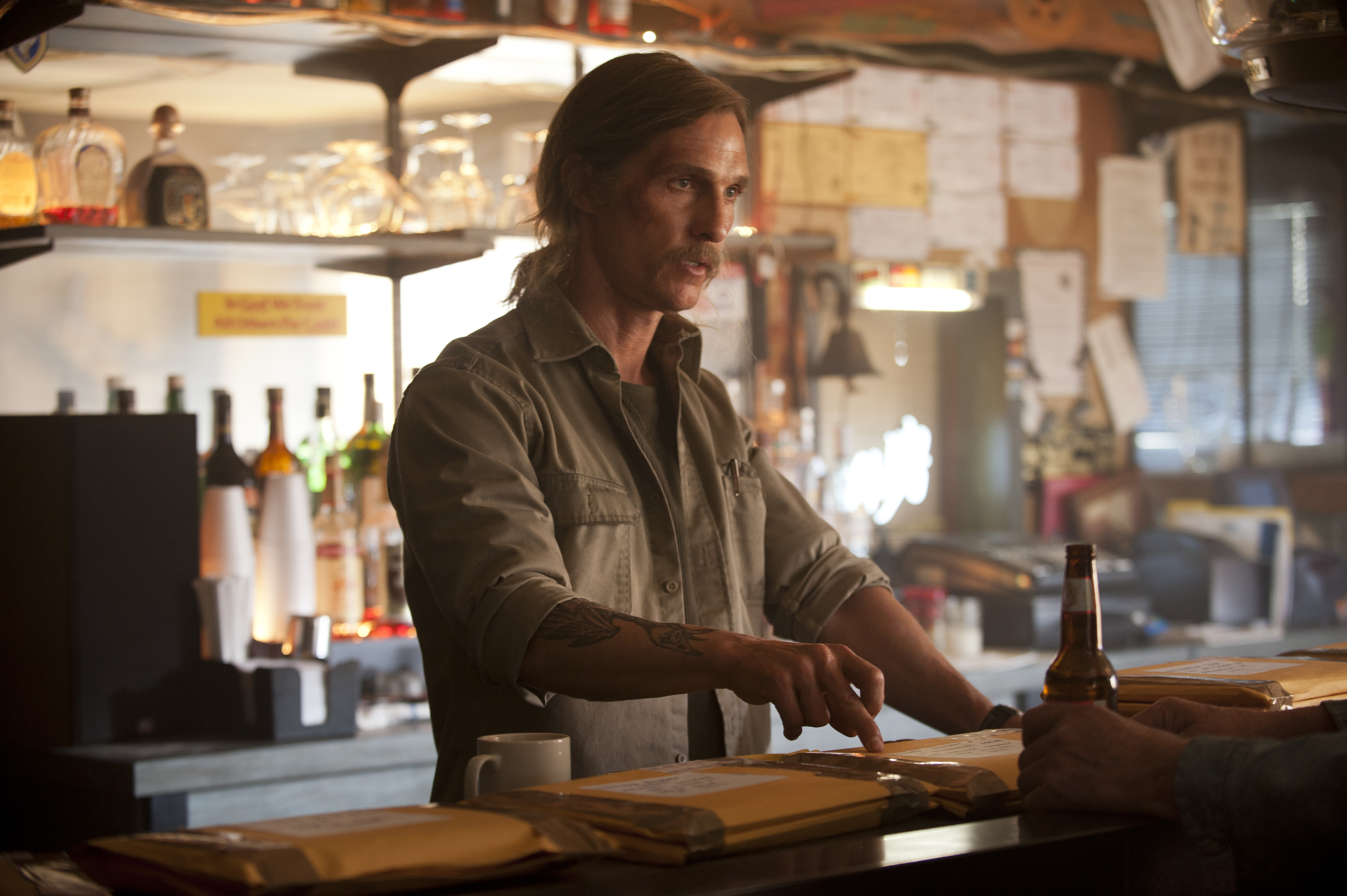
Matthew McConaughey as Rust Cohle in 'True Detective' Season 1.

Anyone who watched Season 1 will recognize “Time is a flat circle” as Rust’s catchphrase. First said to Rust by occultist meth cook Reggie Ledoux moments before Marty shoots him dead, Rust adopts the maxim as his worldview—later deploying it while being interviewed about the Yellow King case nearly 20 years later. The phrase is a reference to a concept popularized by 19th-century German philosopher Friedrich Nietzsche known as “eternal recurrence,” the theory that because time is endless, you are destined (or doomed, if you’re of a similar mind to Rust) to repeat your life an infinite number of times in exactly the same way you’re living it now.

In Night Country, Clark relates the idea that time is a flat circle to Annie taking vengeance on the Tsalal scientists: “She’s been hiding in those caves forever—before she was born, after we all die.”

But in the end, Night Country, even more so than Season 1, seems to reject this philosophy.

What does the ending of True Detective: Night Country mean?

During their night at Tsalal, Navarro and Danvers are plagued by signs from what we’ll refer to as the beyond (the mysterious realm of the dead that has played a significant role in Night Country). In fact—in addition to the eerie appearances of phantom oranges and broken glass—both appear to be literally haunted by the ghosts of their past (Danvers by her son Holden and Navarro by her mom and sister).

With Danvers representing “the non-believer that in moments of doubt believes, and [Navarro] the believer that in moments of doubt doubts,” according to López, the tension between the two over their differing outlooks on death has mounted throughout the season. “There’s something out there calling me,” Navarro tells a frustrated Danvers at one point in the finale. “You need to know something. There’s more than this, Liz. There’s so much more than just this.”

And just as the once unrepentantly nihilistic Rust did in Season 1, Danvers ultimately seems to have a change of heart. After Navarro rescues Danvers from under the ice, Navarro tells her that when Holden appeared in one of her visions, he told her that he “sees” Danvers. This is a direct reference to the peek-a-boo-esque game that Danvers and Holden have repeatedly been shown playing in flashback sequences, but also connects to the blind-in-one-eye symbolism that has recurred throughout the season (think of both the stuffed and living one-eyed polar bear, etc.) On HBO’s official Night Country podcast, López said the game is “a little bit of a metaphor” and “a reference to the fact that we see only part of what is around [us].”

Jodie Foster as Liz Danvers in the 'True Detective: Night Country' finale.

When the Season 1 finale aired in 2014, TIME’s then TV critic James Poniewozik argued that the show’s most shocking development was Rust’s shift in perspective after sensing the presence of his late daughter during his near-death experience. “There was a twist ending, though, and it had nothing to do with the plot but rather the psyche, or dare I say the soul, of bleak-hearted Rust Cohle,” Poniewozik wrote. “He sees meaning. There’s a story here, one story—the oldest—about the fight between light and dark. He and Marty were given their one bit of the dark to extinguish but, just as with the men in the masks, they’ll never get it all. But, he says, ‘Once there was only dark. If you ask me, light’s winning.'”

Considering this closing note, it’s apt that the final scenes of Night Country take place months after polar night has ended, on the first long day of the year. As Danvers is interviewed about the events that took place surrounding the Tsalal murders, we see in flashbacks that (after ensuring Danvers would find the recording she made of Clark confessing to everything the Tsalal men had done) Navarro ultimately walked off onto the ice, presumably to join her mom and sister in the beyond.

However, as the cops questioning Danvers note, in the months since Navarro disappeared, there have still been sightings of her around town. With the mine shuttered and things in Ennis seemingly on the up and up, Navarro’s symbolic presence seems to harken back to the finale’s reveal of the meaning of her Iñupiaq name: the return of the sun after a long darkness.


from TIME https://ift.tt/TKML6hE

Presidents Day: From George Washington’s Modest Birthdays to Big Sales and 3-Day Weekends

Mount Rushmore National Monument

NORFOLK, Va. — Like the other Founding Fathers, George Washington was uneasy about the idea of publicly celebrating his life. He was the first leader of a new republic — not a tyrant.

And yet the nation will once again commemorate the first U.S. president on Monday, 292 years after he was born.

[time-brightcove not-tgx=”true”]

The meaning of Presidents Day has changed dramatically, from being mostly unremarkable and filled with work for Washington in the 1700s to the consumerism bonanza it has become today. For some historians the holiday has lost all discernible meaning.

Historian Alexis Coe, author of “You Never Forget Your First: A Biography of George of Washington,” said she thinks about Presidents Day in much the same way as the towering monument in D.C. that bears his name.

Read More: There’s No Such Thing as a National Presidents’ Day Holiday

“It’s supposed to be about Washington, but can you really point to anything that looks or sounds like him?” she said. “Jefferson and Lincoln are presented as people with limbs and noses and words associated with their memorials. And he’s just a giant, granite point. He has been sanded down to have absolutely no identifiable features.”

Here is a look at how things have evolved:

Washington’s birthdays

Washington was born Feb. 22, 1732, on Popes Creek Plantation near the Potomac River in Virginia.

Technically, though, he was born Feb. 11 under the ancient Julian calendar, which was still in use for the first 20 years of his life. The Gregorian calendar, intended to more accurately mark the solar year, was adopted in 1752, adding 11 days.

Read More: Who Decided February 29th Is Leap Day?

Either way, Washington paid little attention to his birthday according to Mountvernon.org, the website of the organization that manages his estate. Surviving records make no mention of observances at Mount Vernon, while his diary shows he was often hard at work.

“If he had it his way, he would be at home with his family,” Coe said. “Maybe some beloved nieces and nephews (and friend) Marquis de Lafayette would be ideal. And Martha’s recipe for an indulgent cake. But that’s about it.”

Washington’s birthday was celebrated by his peers in government when he was president — mostly.

Congress voted during his first two terms to take a short commemorative break each year, with one exception, his last birthday in office, Coe said. By then Washington was less popular, partisanship was rampant and many members of his original Cabinet were gone, including Thomas Jefferson.

“One way to show their disdain for his Federalist policies was to keep working through his birthday,” Coe said.

The Library of Congress does note that a French military officer, the comte de Rochambeau, threw a ball celebrating Washington’s 50th birthday in 1782.

After his death

Washington was very aware of his inaugural role as president and its distinction from the British crown. He didn’t want to be honored like a king, said Seth Bruggeman, a history professor at Temple University in Philadelphia.

Still, he said, a market for Washington memorabilia sprang up almost immediately after his death in 1799 at age 67, with people snapping up pottery and reproductions of etchings portraying him as a divine figure going off into heaven.

“Even in that early moment, Americans kind of conflated consumerism with patriotic memory,” said Bruggeman, whose books include “Here, George Washington Was Born: Memory, Material Culture, and the Public History of a National Monument.”

Making it official

It wasn’t until 1832, the centennial of his birth, that Congress established a committee to arrange national “parades, orations and festivals,” according to the Congressional Research Service.

And only in 1879 was his birthday formally made into a legal holiday for federal employees in the District of Columbia.

The official designation is as Washington’s Birthday, although it has come to be known informally as Presidents Day. Arguments have been made to honor President Lincoln as well because his birthdate falls nearby, on Feb. 12.

A small number of states, including Illinois, observe Lincoln’s birthday as a public holiday, according to the Library of Congress. And some commemorate both Lincoln and Washington on Presidents Day.

But on the federal level, the day is still officially Washington’s Birthday.

Shift to consumerism

By the late 1960s, Washington’s Birthday was one of nine federal holidays that fell on specific dates on different days of the week, according to a 2004 article in the National Archives’ Prologue magazine.

Congress voted to move some of those to Mondays, following concerns that were in part about absenteeism among government workers when a holiday fell midweek. But lawmakers also noted clear benefits to the economy, including boosts in retail sales and travel on three-day weekends.

The Uniform Monday Holiday Act took effect in 1971, moving Presidents Day to the third Monday in February. Sales campaigns soared, historian C. L. Arbelbide wrote in Prologue.

Bruggeman said Washington and the other Founding Fathers “would have been deeply worried” by how the holiday became taken over by commercial and private interests.

“They were very nervous about corporations,” Bruggeman said. “It wasn’t that they forbade them. But they saw corporations as like little republics that potentially threatened the power of The Republic.”

Coe, who is also a fellow at the Washington think tank New America, said by now the day is devoid of recognizable traditions.

“There’s no moment of reflection,” Coe said. Given today’s widespread cynicism toward the office, she added, that sort of reflection “would probably be a good idea.”


from TIME https://ift.tt/IEcJfdg

Tens of Thousands Rail Against Mexico’s President and Ruling Party in ‘March for Democracy’

An aerial view of a protest called "March for our democracy" at Zocalo square, in Mexico City, Mexico on Feb. 18, 2024.

MEXICO CITY — Tens of thousands of demonstrators cloaked in pink marched through cities in Mexico and abroad on Sunday in what they called a “march for democracy” targeting the country’s ruling party in advance of the country’s June 2 elections.

[time-brightcove not-tgx=”true”]

The demonstrations called by Mexico’s opposition parties advocated for free and fair elections in the Latin American nation and railed against corruption the same day presidential front-runner Claudia Sheinbaum registered as a candidate for ruling party Morena. Approximately 90,000 people turned out to rail against the leader, according to government figures.

Read More: The Ultimate Election Year: All the Elections Around the World in 2024

Sheinbaum is largely seen as a continuation candidate of Mexico’s highly popular populist leader Andrés Manuel López Obrador. He’s adored by many voters who say he bucked the country’s elite parties from power in 2018 and represents the working class.

But the 70-year-old president has also been accused of making moves that endanger the country’s democracy. Last year, the leader slashed funding for the country’s electoral agency, the National Electoral Institute, and weakened oversight of campaign spending, something INE’s head said could “wind up poisoning democracy itself.” The agency’s color, pink, has been used as a symbol by demonstrators.

Read More: As Electoral Protests Swirl, Mexico’s President Goes Viral For Tweeting ‘Proof’ of a Mystical Elf

López Obrador has also attacked journalists in hours-long press briefings, has frequently attacked Mexico’s judiciary and claimed judges are part of a conservative conspiracy against his administration.

In Mexico City on Sunday, thousands of people dressed in pink flocked to the the city’s main plaza roaring “get López out.” Others carried signs reading “the power of the people is greater than the people in power.”

Among the opposition organizations marching were National Civic Front, Yes for Mexico, Citizen Power, Civil Society Mexico, UNE Mexico and United for Mexico.

“Democracy doesn’t solve lack of water, it doesn’t solve hunger, it doesn’t solve a lot of things. But without democracy you can’t solve anything,” said Enrique de la Madrid Cordero, a prominent politician from the Institutional Revolutionary Party, or PRI, in a video posted to social media calling for people to join the protests.

The PRI held uninterrupted power in Mexico for more than 70 years.

Marches were organized in a hundred cities across the country, and in other cities in the United States and Spain.

Still, the president remains highly popular and opinion polls indicate his ally Sheinbaum appears set to coast easily into the presidency.

López Obrador repeatedly dismissed the protests, telling reporters Friday that his critics don’t care about democracy and are organizing the march to return the corrupt to power.

Following the massive demonstration, the leader continued to rail on critics, and said there would be no electoral fraud in the election and that he had not intervened in democratic processes.

“It’s their democracy … the democracy of the corrupt. What we want is there to be democracy of the people. We don’t want power without the people. They’re the one’s that establish an anti-democracy with electoral fraud,” López Obrador said.


from TIME https://ift.tt/JQkmA87

Here’s How Oppenheimer Could Break a Decades-Long BAFTAs Record

Florence Pugh as Jean Tatlock in Oppenheimer

Christopher Nolan’s biopic Oppenheimer, starring Cillian Murphy as the titular character, could hit a new milestone Sunday night at the British Academy Film Awards (the BAFTAs) with the chance to break a decades-old record.

The film about J. Robert Oppenheimer, the creator of the atomic bomb, led nominations for this year’s awards show, receiving 13 nods, including for Best Film. If the movie wins in 10 or more categories, it will beat a record for most wins at the British awards show set 53 years ago.

[time-brightcove not-tgx=”true”]

In 1971, classic Western film Butch Cassidy and the Sundance Kid swept nine awards at the BAFTAs––a tally that hasn’t been topped since. Only one of the film’s nominations that year didn’t succeed.

Appearing on the podcast Countdown to the BAFTAs with his wife and another one of the film’s producers, Emma Thomas, Nolan said the release of a “three hour R-rated film about quantum physics” that “made a billion dollars” reminded “the studios that there is an appetite for something people haven’t seen before or an approach to things that people haven’t seen before.”

At the 2024 BAFTAs, Oppenheimer is in the best position to end the Western’s winning streak. Yorgos Lanthimos’ Poor Things is also a contender, having received 11 nominations. Meanwhile, Martin Scorsese’s Killers of the Flower Moon and Jonathan Glazer’s The Zone of Interest received nine nominations each, meaning they could tie but not beat the previous record for most wins.

Greta Gerwig’s Barbie, which earned more at the box office than Oppenheimer when the two movies opened on the same weekend last summer, earning the coined phrase “Barbenheimer,” received five nominations––none for Best Film.

The BAFTAs, taking place Sunday at the Royal Festival Hall in London, will be hosted by Scottish actor David Tennant and feature the stars of 2023’s most celebrated films. 

Oppenheimer has already racked up awards this season, taking home trophies at the Critics Choice Awards, Golden Globes and Grammys, and received the most nominations at the Oscars, which will take place in March.

Barbie was nominated for Oscars for Best Picture and other categories, but the list snubbed Gerwig for directing and the film’s star Margot Robbie for best actress in a leading role, drawing criticism from co-star Ryan Gosling, who is in the running for best supporting actor.


from TIME https://ift.tt/7mahuLd

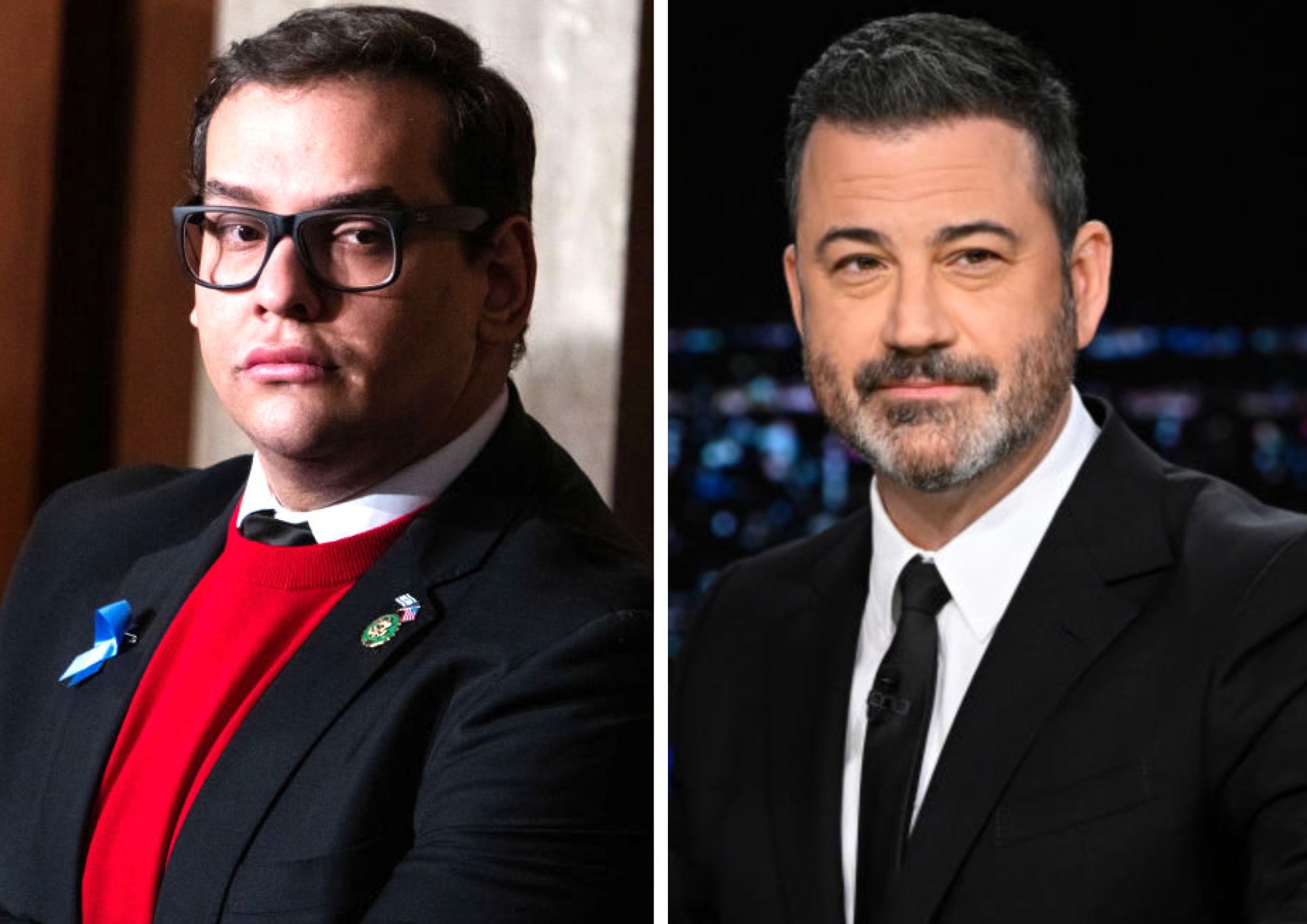
George Santos Is Suing Late-Night Host Jimmy Kimmel Over Cameo Video Pranks

NEW YORK — Former U.S. Rep. George Santos alleged in a lawsuit filed Saturday that late-night host Jimmy Kimmel deceived him into making videos on the Cameo app that were used to ridicule the disgraced New York Republican on the show.

The lawsuit filed in U.S. district court for the southern district of New York names Kimmel, ABC and Walt Disney Co. as defendants. A Disney representative listed as a media contact for the Jimmy Kimmel Live! show didn’t immediately respond to an email from The Associated Press seeking comment.

[time-brightcove not-tgx=”true”]

Santos, who was expelled from the House of Representatives last year after being charged with multiple counts of fraud and stealing from donors, is suing over alleged copyright infringement, fraudulent inducement, breach of contract and unjust enrichment.

Kimmel misrepresented himself to induce Santos to create personalized videos “capitalizing on and ridiculing” his “gregarious personality,” the lawsuit alleges.

Through Cameo, Santos received requests from individuals and businesses seeking personalized video messages. Unbeknownst to Santos, Kimmel submitted at least 14 requests that used phony names and narratives, according to the complaint.

Starting in December the videos were played on a segment, “ Will Santos Say It? ” the suit says.

In one of the clips, Santos offers congratulations to the purported winner of a beef-eating contest, calling the feat of consuming 6 pounds (2.7 kilograms) of loose ground beef in under 30 minutes “amazing and impressive.”

“Frankly, Kimmel’s fake requests were funny, but what he did was clear violation of copyright law,” Robert Fantone, an attorney for Santos, said in an email.

Santos is seeking statutory damages totaling $750,000 for the five videos he created that were played on the show and various social media platforms. He also asks for other damages to be determined at trial.

The ex-lawmaker faces a slew of criminal charges, including allegations that he defrauded campaign donors, lied to Congress about his wealth, received unemployment benefits while employed and used campaign contributions to pay for personal expenses like designer clothing. He also is alleged to have made unauthorized charges on credit cards belonging to some of his donors.

Santos pleaded not guilty to a revised indictment in October.

On Tuesday, Democrat Tom Suozzi won a special election for Santos’ former seat.


from TIME https://ift.tt/TaOY104

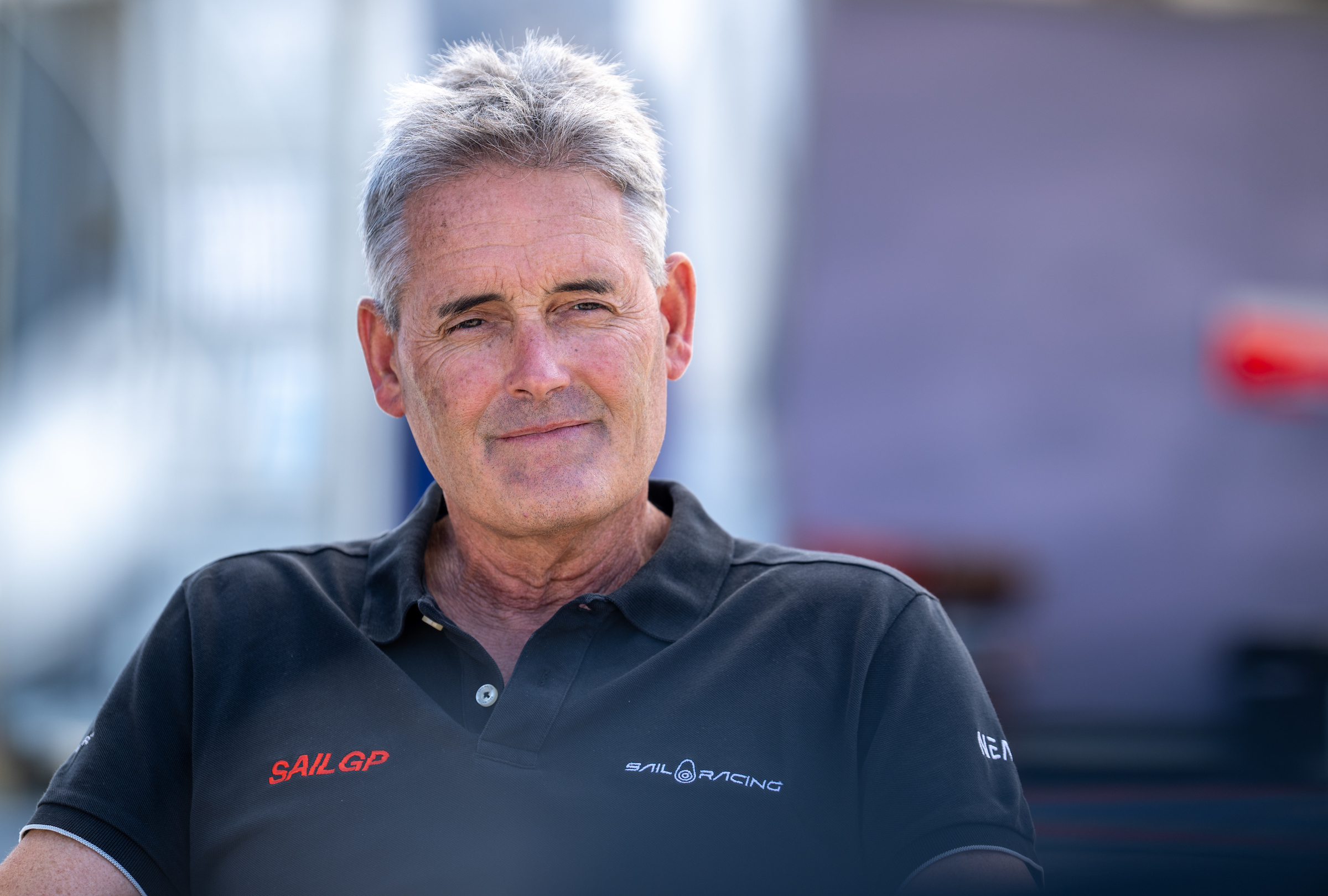
Meet the Sailor Who Thinks His Sport Is the Next Formula 1

Russell Coutts, SailGP

First, Formula 1 got hot in the United States and beyond, thanks in large part to a Netflix series, Drive to Survive, that showcased the circuit’s personalities, rivalries, and some really fast cars. Then there’s the pickleball craze, which started during the pandemic and hasn’t lost much momentum.

What niche sport will get hot next?

Russell Coutts, the CEO of the upstart professional racing organization SailGP, is making his case for sailing, that genteel elitist country club pastime which is indeed gaining some momentum in the U.S. Coutts, the five-time America’s Cup winner, 1984 Olympic gold medalist and two-time world sailor of the year, co-founded SailGP in 2018, along with Oracle founder and chairman Larry Ellison. Currently in its fourth season, SailGP features teams representing 10 different countries, including the U.S., New Zealand, Australia and Great Britain, and is holding 13 events across the globe. The next races take place in Sydney Harbour, on Feb. 24 to 25; the season concludes with events in New York and San Francisco in June and July, respectively.

[time-brightcove not-tgx=”true”]

According to SailGP, the worldwide broadcast audience per event through the first half of this season is up nearly 24% over season three, reaching 13.6 million. The league’s social following has grown by 56%, and in November of 2023, 1.784 million viewers tuned into the CBS broadcast of a race in Spain, a SailGP record for an American audience. That was the most-watched sailing race in the U.S. since 1992. It outrated the Formula 1 race that day, from Brazil, which drew some 909,000 viewers on ESPN2. That month, a group of investors led by Avenue Capital Group CEO Marc Lasry, former owner of the NBA’s Milwaukee Bucks, purchased SailGP’s U.S. team in the largest transaction in league history. The group also includes actress and producer Issa Rae, world champion heavyweight boxer Deontay Wilder, and ex U.S. soccer player Jozy Altidore.

Coutts met with TIME in New York City in mid-January to discuss the trajectory of SailGP, the circuit’s high-tech catamarans and the challenges facing the sport.

This interview has been condensed and edited for clarity.

For those who are not familiar, what is SailGP?

The sport of sailing did not have a regular annual championship that was professionally televised and marketed before SailGP. We have fast, hydrofoiling boats. Other people have referred to it as a Formula -style championship on water. The difference between what we are doing and what other sports, like motor sports, are doing is our boats are identical. Even though they are evolving constantly and we’re introducing new tech, other teams get to access that new technology together. We’re a centrally managed organization. The teams actually lease the assets from us, so that ensures that they really are identical. This is really about who the best athletes are, rather than who has the best resources.

They certainly don’t look like how you’d picture traditional sailboats.

When you look into the cockpit of one of these boats, it is like looking into an aircraft. You’ve got all the control panels. It looks like a Formula 1 steering wheel. You’ve got various control switches on the steering wheel. If there was anything like medium wind and upwards, a club sailor would probably hurt himself.

What are some of the key metrics that seem to show that SailGP is on the right path?

We started out with six teams in year one. Now we’ve got 10. All six of those teams were funded by the league. Now, five of the 10 teams are funded by investors who bought rights to those teams. And we’re closing in on two more sales now. So seven of the 10 will be funded from the outside. And we’re going to add two more teams in season five.

We started out with five events in season one. Now we’ve got 13. We want to try to get to 20-plus events a season. We want to get to the stage where there are events every two weeks or so. That’s roughly what Formula 1 has.

Why do you have faith that SailGP can become the next Formula 1?

Audience growth is the first thing. Second, the commercial model is strong. We started selling teams between $5 million and $10 million. Now you can’t buy a team without $35 million. We know we’ve got demand for teams. We can’t build boats fast enough. We didn’t think we’d be in this position before the end of season five. So the fact that we’re already in that position is pretty encouraging.

Similarly, with venues, in season one didn’t charge anything. We basically pleaded with venues to let us host a race. Whereas now, there is competition. We accept venue fees from most venues. That’s becoming quite a big component of our commercial model.

With [sponsor] Rolex, we did a five-year agreement in our first year. They came back to us, between seasons two and three, with a new proposal, extending the partnership out 10 years. The value is easily measurable. The data doesn’t lie. Our partners see that data. That is why we have great confidence.

Do you think the “Drive to Survive” effect has carried over to SailGP, where more people are interested in watching any kind of racing?

We think somewhere between 30% and 40% of our audience has some connection with sailing. Most of them are racing fans or general sports fans. They also like personalities. And we haven’t really developed that side of it yet. We do our own sort of little YouTube video series, which had about 2.1 million viewership last season. That’s sort of a behind-the-scenes docuseries. But now we’ve got real interest from major players to do a full on documentary. I think that’s how we take our personalities to the next level.

Is there anyone you have now who could be a standout in such a series?

We’ve got Phil Robertson. [who races for the Canada SailGP team]. Some high-profile people in our organization have described him as the Mad Max of SailGP. You don’t know what the hell is going to happen. There’s moments of brilliance. And moments of, not so brilliant.

Is Robertson sort of a Nick Kyrgios-type?

That might be exaggerating, but it’s definitely towards that. He’s always fighting with the umpires and arguing with other competitors, which is gold dust for us.

Sorry to introduce some skepticism to the Formula 1 comparison, but why would a fan prefer watching SailGP catamarans topping out at speeds of 60 miles per hour on water, when F1 cars exceed 200 miles per hour?

It’s the same people watching. The learning we’re having is that as long as it’s a good race, they will watch. The Aussies have won the first three championships by skill. Now, only two teams have yet to win an event. All teams except one, Germany, have won a race. We need that to make those teams commercially viable.

Is there anything you learned from your career as a skipper that you’ve brought to running SailGP?

Anyone who gets to the top of their sport, you don’t get there with talent alone. I got there by outworking the opposition. We’re going to be better just by doing more. Doing more, but doing it smarter. So that work ethic has really helped me in my business career.

When I was in the early days of working with Larry Ellison, I actually asked him one time, “what’s the secret to success in the business?” He started by giving a long-winded answer and I think he saw my eyes glaze over. I probably wasn’t following as closely as I should have. And he actually stopped and said, “you know what the most important thing is? Not giving up.” He’s right. In the face of so many challenges, particularly with new staff, things aren’t going to go right. And it’s a matter of, how are you adapting to it?

Sailing has a reputation as an elite, white sport.

Absolutely. We don’t shy away from that. We say that’s a problem. And we want to change it.

Having high-profile Black investors, like Issa Rae, can help change that perception. How else do you build diversity?

We go to a place like the Middle East, which some people say conflicts with your environmental objectives. I disagree. I absolutely disagree with that approach. To me, it’s an exciting new territory where hopefully we can add some value. Particularly with the younger generation. I’m really excited about those sorts of places. We shouldn’t be close-minded. We should be connecting with people. That makes us much more likely to understand each other.


from TIME https://ift.tt/0OyhciU

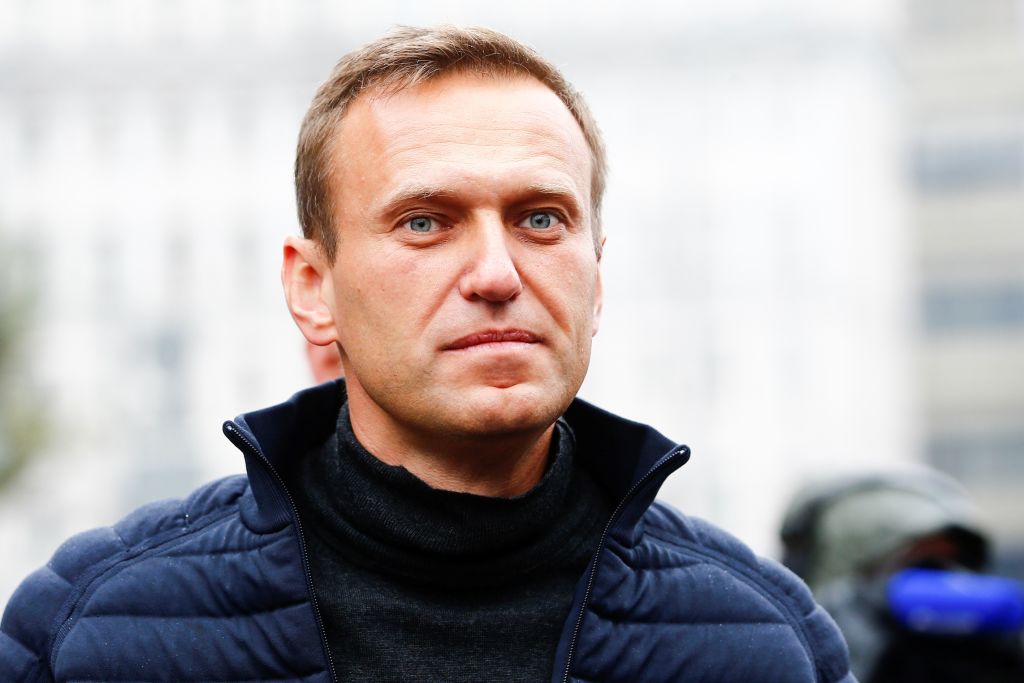
Alexei Navalny Is With Us Forever Now

Rally in support of political prisoners in central Moscow

It was on New Year’s Day. On January 1, 2015, Alexei Navalny called me. “Well, you and us have no one else left but you and us. Let’s work together,” he said.

It was indeed probably the hardest time for both him and me. I was editor-in-chief of the Dozhd TV channel at the time, and we were almost destroyed: we were cut off from all cable and satellite operators, and we were kicked out of our studio. But Navalny faced much worse: the criminal case, which was invented only to force him to stop his political activities, came to an end with Alexei himself given a suspended sentence, but his brother was imprisoned. Well, the main thing is that all of us, both Dozhd and Navalny, were not sure if we were still needed—in 2014 Putin occupied Crimea, Russia was overwhelmed by a wave of jingoism. Dozhd stopped being the most influential TV channel and Navalny stopped being the most popular politician. “Well, you and us have no one else left but you and us.”

[time-brightcove not-tgx=”true”]

We really started working together then—we helped his team, Anti-Corruption Foundation (ACF), to make the first high-profile investigative movie: about Prosecutor General Chaika. That movie has 26 million views today. By now ACF released dozens more great investigative films. And I’m proud to have been around at the very beginning.

In late 2015, I wrote a book called All the Kremlin’s Men. Inside the Court of Vladimir Putin. One chapter in that book was about Alexei—although he never belonged to that court. However, he was always its main enemy.

Each chapter began with a portrait of the character, and I described Navalny then as follows:

“Alexei Navalny is an alien. At first glance he looks like an ordinary person, and watching him walk the streets or ride public transportation, you might inadvertently think that he is an ordinary man. In short, he does everything that ordinary people do and which top government officials and superstars do not. But appearances are deceptive. Navalny wears a human mask, like an extraterrestrial in a sci-fi movie, to hide his real identity—that of a politician.

Navalny’s life is hard. The state machine is out to get him, and he has to deal with that somehow. For instance, he does not drive for fear that a “provocateur” might jump in front of his car, whereupon he, Navalny, could be prosecuted.

Navalny is certainly aware that he is a superstar. Jail is perhaps the last place Putin wants him to be, since that would make him a martyr and increase his popularity. Navalny understands his exclusivity. He is probably the only real politician out of Russia’s 143 million inhabitants…

But Navalny is a unique person who made a conscious choice. As yet he has no power, and may never have. But he has certainly sacrificed the chance to lead a normal life, although he describes it as an opportunity to change Russia for the better.

If Russia had an open political system, Navalny would probably not be alone. But because it does not, there seems to be no one else crazy enough to trade in life for politics. Why does Navalny continue to believe that his time will come and that one day he could succeed Putin as president? There’s only one rational explanation—he’s an alien.”

I was naive at that time—all of us, including Alexei, were naive. We would never believe that Putin wanted him dead. Because we thought that he didn’t want Navalny to be a martyr. We were wrong. We are people and people are often wrong.

When Putin poisoned Navalny in 2020, I knew he would survive. I don’t know why. Maybe I was too naive again. I always thought that Alexei is very morally strong, he is a historical figure, he cannot die. And he survived, exposed his assassins and made Putin a laughing stock. And for me there was not even a question whether he would stay in Europe or go back. I’ve described it all before: if he were an ordinary human being, he would stay to live. But he’s an alien. He had already made his choice to devote himself to politics. And that’s why he had to come back.

About a week ago, I received an email from Alexei. It was, of course, incredibly funny and energetic. He wrote that he was sitting in a cell from which you can’t see a blade of grass or a leaf, and even to take a walk he was taken only to a neighboring cell, but he wrote it so cheerfully and dashingly that there was no doubt that everything was all right with him, nothing would break him. 

He also wrote about the collapse of the USSR and what a unique chance Russia had in the 90s, and how it was lost, and how important it is not to miss the chance that will appear during the upcoming collapse of Putin’s Russia. 

He also wrote about Dostoevsky, Tolstoy, Nabokov, Solzhenitsyn, and Vysotsky. He was glad that in the new colony he was able to reread Crime and Punishment—because the library there is very small, there are only books from the Russian school program, but Dostoevsky, of course, is there. His letter ends with his traditional joke: “Be like Nabokov and better!”, he writes.

Now I don’t know if he had time to receive my reply, where I tell him why I don’t like Dostoevsky. And also describe  some important moments from my future book. And at the end I write: “Hope to see you soon.” 

I never doubted that I would see him again. I was always sure that Navalny is a supernatural person, he can’t die, aliens don’t die so easily. 

I think many of us thought he was a magician. Everyone knew that it cannot be like that: at some point he casts some sort of spell, Putin disappears and Alexei becomes the Russian president. Everyone knew it would be long and difficult. But, somehow Alexei will manage to survive it. And then, after all, some sort of spell—and, pop, he is the president of Russia.

But it turns out it won’t be like that. He won’t be the president of future Russia, he’ll have to be the founding father of the future Russia. He is with us now forever as a perfect example. As a messiah. As a superhero for many generations, on whose story children will grow up. It is not Putin they will look up to. 

He will remain in history as a man who believed that Russia could be a normal democratic country, believed in values, and despised the nonsense about a unique Russian path and doom to be an empire. He was always an idealist. He was not a cynic, did not believe that everything could be sold and bought.

For many years Russia was a very cynical country. Nobody believed in anything. Many people seriously believed that there was no democracy in the world, and there was no freedom of speech, only propaganda everywhere, and there was no such thing as fair justice. But Alexei believed in all those values. And he gave his life for it. So now we all have to believe. And the next generations will grow up and learn by looking at him—and they will also believe.

Now it seems to many people that Russia no longer has a future. But in fact, its future is precisely those people who are mourning Alexei Navalny all over the world. He united us and asked us not to give up. “You and us have no one else left but you and us. Let’s work together.”


from TIME https://ift.tt/529ByJ1

Saturday, February 17, 2024

NBA Champion Scot Pollard Receives Heart Transplant

Scot Pollard Heart Transplant Basketball

NBA champion and “Survivor” contestant Scot Pollard has had a heart transplant, his wife said on social media on Friday night.

“Scot has a new heart!” Dawn Pollard posted on X, formerly known as Twitter. “Surgery went well and I’ve been told the heart is big, powerful and is a perfect fit! Now on to the crucial part of recovery. Thank you to everyone for the continued prayers and support, but most of all, deepest thanks to the donor, our hero.”

[time-brightcove not-tgx=”true”]

Pollard, who turned 49 on Monday, needed a transplant because of damage to his heart from a virus he caught in 2021 that likely triggered a genetic condition he has known about since it killed his father at 54, when Scot was 16. Pollard’s size complicated efforts to find a donor with a heart big enough to fit his 6-foot-11, 260-pound body.

Earlier Friday, Dawn Pollard posted that a heart had been found.

“It’s go time!” she posted on X. “Please keep the prayers coming for Scot, the surgeons, for the donor and his family who lost their loved one. This donor gave the most amazing gift of life and we are forever grateful.”

Pollard was a 1997 first-round draft pick after helping Kansas reach the NCAA Sweet 16 in four straight seasons. He was a useful big man off the bench for much of an NBA career that stretched over 11 years and five teams. He played 55 seconds in the Cleveland Cavaliers’ trip to the NBA Finals in 2007, and won it all the following year with the Boston Celtics despite a season-ending ankle injury in February.

Pollard retired after that season, then dabbled in broadcasting and acting. He was a contestant on the 32nd season of “Survivor,” where he was voted out on Day 27 with eight castaways remaining.

Pollard went public with his condition last month and began the process of listing himself at transplant centers. He was admitted to intensive care at Vanderbilt University Medical Center on Feb. 7.

“I’m staying here until I get a heart,” he said in a text message to The Associated Press from his hospital room in Nashville, Tennessee. “My heart got weaker. (Doctors) agree this is my best shot at getting a heart quicker.”


from TIME https://ift.tt/e4oX1pQ

Virginia Home Explosion Kills One Firefighter and Injures Others

Virginia Home Explosion

STERLING, Va. — One firefighter was killed and nine others were injured when an explosion in a Washington, D.C., suburb on Friday leveled a home where they were investigating a gas leak. Two other people were also injured.

The firefighters were called to the home in Sterling, Virginia, by a report of a gas smell shortly after 7:30 p.m. and a fiery explosion took place about 30 minutes later, fire officials said.

[time-brightcove not-tgx=”true”]

The blast and fire occurred while firefighters were inside the building, James Williams, assistant chief of operations for Loudon County Fire and Rescue, said at a news conference.

“Soon after arrival, with firefighters inside, the house did explode,” Williams said.

One firefighter was killed, while nine firefighters and two others were taken to hospitals with injuries ranging from limited to severe, Williams said.

“We have all firefighters out of the building. The fire will continue to smolder,” Williams said.

He described damage to the home as “total devastation.”

“There’s a debris field well into the street and into the neighboring homes,” he said.

Williams said the cause of the fire was under investigation.

In a post on X, formerly Twitter, the Sterling Volunteer Fire Company said its crews had responded to a report of a gas leak before the blast.

A neighbor, John Padgett, told ABC7 News that he had smelled gas while walking his dog earlier.

The blast shook his home, he said.

“It looked like an inferno,” and insulation from the burning home fell like ash, he added. “It was horrific; it looked like something out of a war zone.”

Sterling is about 22 miles (35 kilometers) northwest of Washington, D.C.


from TIME https://ift.tt/uj5HCDa

3 Ways to Make Conflict Less Destructive

Two ropes pulling on a larger rope to shape its path

“Do you think you could sum up the essence of all you’ve learned in one sentence?”

That was the question my friend Jim Collins, the famed leadership author, suddenly asked me as we were hiking up a mountain a few years ago.

“You’ve been wandering around the world for the last 45 years,” he continued, “working in some of the world’s toughest conflicts from the Cold War to the Middle East, from strikes to boardroom battles. What can help us in these times of intense conflict?”

[time-brightcove not-tgx=”true”]

I am an anthropologist by training. If I were a Martian anthropologist looking at us now, I would say we live in a time of great paradox. Never before in human evolution have we enjoyed such an abundance of opportunities to solve the world’s problems and live the life we want for ourselves and our children. And yet at the same time, with the rapid changes and disruptions, we face a wave of destructive conflict that’s polarizing every facet of life from family to work to community to our world—and paralyzing our ability to work together.

How do we navigate this stormy time to be able to realize the enormous opportunities we have at hand? 

First, we need to be realistic: we can’t end conflict. Nor should we. In fact, we may actually need more conflict, not less—and by that, I mean the healthy conflict that allows us to engage our differences, grow, and change what needs to be changed. The choice we face is not to get rid of conflict but to transform it from destructive fighting into creative, constructive, collaborative negotiation.

So what do we need to transform our conflicts and navigate these tumultuous times?

Read more: The Science of Getting Along

I would suggest we need three things above all: a clear perspective, a way out, and lots of help from others.

Let’s start with perspective. When it comes to conflict, we are often our own worst enemies. The biggest obstacle to getting what I want is not what I think it is. It is not the difficult person on the other side of the table. It is the person on this side of the table—it is the person I look at in the mirror every morning. It is our natural, very human, very understandable tendency to react—often out of fear and anger. We humans are reaction machines. As writer Ambrose Bearce once quipped, when angry you will make the best speech you will ever regret.

What’s the alternative?

It’s to do the exact opposite and pause for a moment. It is to think about what you really want and how you can get there. Imagine yourself on a stage and then go to the balcony—a place of calm where you can keep your eyes on the prize and see the bigger picture.

In other words, start by stopping.

That sets us up for the next challenge to find a way out. In today’s tough conflicts, we need more than ever to be able to find a way out of the labyrinth of destructive fights.

The other side may be far from cooperative. They dig in and refuse to budge.They pressure, attack, and threaten.  

Their position, their mind, is far away from yours. There is a huge chasm in between where you are and where they are. That chasm is filled with fear, anger, doubt, unmet needs, distrust. Our challenge is to build a bridge over the chasm—not just an ordinary bridge, a golden bridge. In other words, create an attractive way out for them and for you. 

Instead of pushing, do the exact opposite: attract. Instead of making it harder for them, do the exact opposite. Make it easier for them, easier to make the decision you want them to make. Leave your thinking for a moment and start the conversation where their mind is. Listen to them, try to put yourself in their shoes, and figure out their needs and fears so you can address them while advancing your interests, too.

That leads me to the third point: get some help. In today’s tough conflicts, it’s not easy to go to the balcony or build a golden bridge. No matter how good we might be, we are going to need help—and lots of it. 

Here’s the very common mistake we make when things get rough. We reduce the conflict to two sides—it’s us against them, union against management, Democrats against Republicans. What we forget is that in any conflict there is always a third side — the people around us, the friends, family, colleagues, neighbors, allies, and neutrals.

The third side constitutes a huge untapped potential resource for transforming the conflict. It is like a container within which even the hardest conflicts can begin to give way to dialogue and negotiation. The surrounding community can help calm the people who are fighting. It can bring the parties together and help them communicate and understand each other better. It can help them explore a way out, a golden bridge.

When the conflict is really hard, we may need a kind of community intervention. I call this a “swarm —a critical mass of persuasive influence and assistance—that can help the parties find a way through their difficulties. We need to mobilize the third side—the surrounding community—and build a winning coalition for agreement.

After all these decades working in tough conflicts and wars, people often ask me: are you an optimist or a pessimist? I like to answer that I am actually a “possibilist.” I believe in our human potential to transform even the toughest conflicts from destructive fights into creative negotiations. I believe it because I’ve seen it happen with my own eyes—in coal strikes, bitter boardroom battles, family feuds, and wars around the world. I’ve watched people unlock their hidden human potential and make the seemingly impossible become possible.

Where there are obstacles, possibilists look for opportunities. It is a change in mindset.

Possibilists aren’t blind to the dark side of human nature. To be a possibilist means to look at the negative possibilities too, but then to use that perspective to motivate us to look for the positive possibilities that avert the worst and bring about the possible.

I have seen how conflict can bring out the worst in us, but it can also bring out the best.

So what was the single summary sentence I offered Jim on that memorable mountain hike? “The path to possible is to go to the balcony, build a golden bridge, and engage the third side.” 

No conflict, however difficult, is impossible. Conflicts are, after all, made by humans so they can be solved by humans. And if we can transform our conflicts, we can transform our lives. We can transform our world.

That is my dream.


from TIME https://ift.tt/myCFJcX

China Is Munching Toward a Fast Food Revolution

TASTIEN Hamburg Store in Suqian

When I stumbled upon a poster featuring a “Chinese Burger” with a Gen-Z idol dressed in a qipao dress and striking a kung fu pose in Shanghai, I couldn’t help but scoff at it. “I’ve seen this before,” I thought to myself, recalling similar marketing ploys that never seemed to last.

But I would be proven wrong. While there have been countless attempts at adding a Chinese twist on Western goods, none had the appetizing consumer market that local fast food chain Tastien enjoys today. In many ways, it is a small signifier of a larger revolution of Xinzhongshi, or “New Chinese Style,” that has now infiltrated mainland Chinese consumers’ lives.

[time-brightcove not-tgx=”true”]

Costing 30-40% less than the typical KFC fried chicken burger in China, the 12-year-old Tastien replaces burger bread doughs with bread pockets, and its limited-time offers stuffing options of traditional Chinese dishes like Yuxiang shredded pork and Mapo tofu. Chinese consumers, especially those in lower-tier cities, are lapping it up. Tastien last year added a whopping 3,500 stores to reach 6,700, edging closer toward McDonald’s 5,900 and KFC’s 12,000, which added around 900 and 1,200 stores, respectively.

The new Chinese style powering this growth is focused on the culture, presentation, and branding of products that channel traditional Chinese culture. It can be bubble tea in a cup made of bamboo, a modified qipao dress with features better suited for mobility, or even the style of one’s home decor.

Why are people so excited about the new Chinese style? The answer lies in the modern Chinese history of shedding traditional customs and, more recently, the evolution of the guochao trend.

One element of Mao Zedong’s Cultural Revolution, which ran from 1966 to 1976, was the demand that the country shed its Four Olds: “Old Ideas, Old Culture, Old Customs, and Old Habits.” Even Chinese New Year customs including setting off firecrackers, and dragon and lion dances, were canceled during that time. That development, along with market reforms starting in 1979 that nudged China toward capitalism, shaped modern mainland China as a receptacle for Western ideas and culture. KFC would go on to open its first store in China in 1987; McDonald’s in 1990.

Some of my happiest memories growing up in the 1990s were relishing in Western fast food chains like KFC. The greasy fried chicken with mayo and thinly sliced lettuce slapped in between white burger buns was seen as an exotic reward when we earned good grades at school. I still remember the anticipation of waiting at the window to see my mom riding a bike carrying KFC.

Read More: A Very Brief History of Chinese Food in America

But in the wake of China’s soaring economy, which created the world’s largest middle class, President Xi Jinping has been advocating for “cultural confidence” since he took office in 2012. The word guochao, which means “China chic” or “national hip,” was coined later in the decade and reflected the growing cultural pride mixed with rising nationalism among consumers.

That pride was noticed by policymakers, who pushed out supporting guidelines and incentives for more brands and e-commerce platforms to follow suit, including the 2017 decision to mark May 10 as China Brand Day every year. Guochao is now used to describe any made-in-China goods, or any products that contain Chinese symbols, techniques, or technologies.

Tastien has capitalized on Guochao but so have other fast food chains like Mr. Rice and Home Original Chicken that serve small stir fry dishes that are closer to China’s traditional foods, as well as beef noodles and Rougamo, a meat sandwich originating from Xi’an.

Even KFC started introducing a new Chinese style brand, Grandpa’s Homely Tea, in my home province Jiangsu, with a logo featuring a cartoon version of the famous Colonel Sanders in a Chinese-style long gown. Its menu and price points look no different than any other new Chinese style tea shops, and it currently has over 20 stores and counting. 

If Western fast food brands were the tastemakers in the early days of China’s economic rise, they are now giving away to homegrown upstarts. I’ll always have a soft spot for the KFC greasy fried chicken burger of my youth. But for a new generation of Chinese, they may one day look at milk tea or brands like Tastien with a similar feeling of nostalgia.


from TIME https://ift.tt/Gdktjlu

Thursday, February 15, 2024

Greece Extends Marriage, Adoption Rights to Same-Sex Couples in Historic Parliament Vote

GREECE-LGBT-ADOPTION-RELIGION-FAMILY-POLITICS

For more than 20 years, Stavros Gavriliadis and Dimitrios Elefsiniotis have been building a life together. They bought a house and started a family. But under Greek law, they couldn’t marry or both be recognized as the parents of their three children—until this week.

[time-brightcove not-tgx=”true”]

Greece’s parliament voted on Thursday to extend equal marriage and automatic parental rights to all of the country’s 10.5 million citizens, and to allow same-sex couples to adopt. It is the first majority Christian Orthodox country to take the step, and now stands out in a region largely opposed to change. 

“Our suits and wedding rings are already ready,” Gavriliadis said. “Maybe we’ll be the first to get married.”

The new law means the 52-year-old allergist will no longer go to bed worrying that his son will become a ward of the state if he dies before his partner, or if he’ll be allowed to pick up his (non-biological) twins from school. The five of them will finally be considered a single family in the eyes of the law—not “strangers” as Gavriliadis put it.

“The reform makes the lives of lots of our fellow citizens much better, without taking away anything from the lives of the many,” Prime Minister Kyriakos Mitsotakis said. “Marriage is nothing more than the culmination of the love of two people who choose to be together by making a commitment to themselves, the state and society as a whole.”

Legalizing same-sex marriage, a key part of Mitsotakis’s effort to modernize Greece, marks a major step for a prime minister coming from a conservative party. Even after winning a landslide election in June, he had to rely on support from the center-left and leftist opposition parties to pass the measure amid resistance from parts of his own party as well as the influential Greek Orthodox church.

Read More: What Topped Asia’s Legal Agenda in 2023—From Same-Sex Marriage to the Death Penalty

“Mitsotakis carries weight and feels he can spend some political capital to deal with sensitive issues at the same time that the opposition is also in deep crisis,” said Wolfango Piccoli, co-president of London-based Teneo Intelligence.

Support from the opposition came from Stefanos Kasselakis, leader of the leftist Syriza, the second-largest party in the parliament, who had called on his lawmakers to approve the bill ahead of the vote. Kasselakis, himself a gay man, married his American partner in the U.S. in October. Nikos Androulakis, leader of the socialist Pasok, also backed the proposal, as well as two smaller leftist parties.

Campaigners and rights activists say the new law doesn’t go far enough because it doesn’t allow male same-sex couples to have children via surrogacy in Greece—that is reserved for women unable to conceive and remains a sensitive issue across much of Europe, where governments are uneasy with the procedure they view as a commercial transaction.

While Britain and Greece are very different societies, it was the experience of another leader—David Cameron—that showed incorporating more people into the institution of marriage and family is consistent with conservatism, according to Minister of State Akis Skretsos, who was responsible for introducing the legislation to the Greek parliament.

Cameron pushed for same-sex marriage after becoming U.K. prime minister in 2010, over the objections of his own party, the church and despite a lukewarm electorate. By the time it was brought to parliament, Britain’s national mood had shifted towards greater tolerance. The law came into effect in 2014. Cameron has said it is his proudest achievement.

For Eleni Maravelia, a 47-year-old e-commerce manager in Barcelona, Greece’s new law means she can now move back home with her family.

“Such a move wasn’t possible before as my wife would have had no rights over our children, including not being able to take decisions regarding their well being,” she said. 

Maravelia added, “There is a major obstacle in the European Union in terms of freedom of movement to live and work elsewhere as LGBTIQ families are recognized in a country such as Spain, but not in another such as Italy.”

The E.U. is trying harmonize legislation across the bloc to address that, but is meeting resistance from countries like Italy and Hungary—where governments are cracking down on their LGBTQ communities. With Greece, 16 member states out of 27 now recognize same-sex marriage.

“Greece breaks the mold as the first country in the southeast of the E.U. that adopts marriage equality—it reaffirms Greece’s position in the heart of Europe,” said Alex Patelis, senior economic adviser to the Greek premier.

Read More: Russia’s Court Ban of the ‘LGBTQ Movement’ Is the Latest Global Move Against Inclusion

The shift was a long time in the making. Rights campaigners began pushing for it in earnest in 2008 when a civil union pact was introduced that excluded LGBTQ people. It took another seven years for civil partnerships to be open to all Greeks, under Alexis Tsipras’s left-wing government.

While those unions recognized same-sex partners who entered them as next of kin and allowed them to enjoy some of the same rights as married couples, they didn’t automatically come with the same adoption rights and parental recognition as marriage.  

In his first term, Mitsotakis sped up the pace of change, introducing a number of reforms to equalize rights, including lifting a ban on homosexual men making blood donations. Greece jumped up rankings that track the legal and policy situation for LGBTQ people.

For now, Gavriliadis said the new law is a welcome solution to his family’s problems.

After marriage, he will officially adopt the twins of Dimitrios and Dimitrios will adopt his son.

“We’ll finally be one family with two surnames,” he said. The law “honors freedom, equality, love, our dignity and ensures the rights of our children.” 


from TIME https://ift.tt/P426t3q